Venice (Week 13)

Venice I
Gondolas everywhere

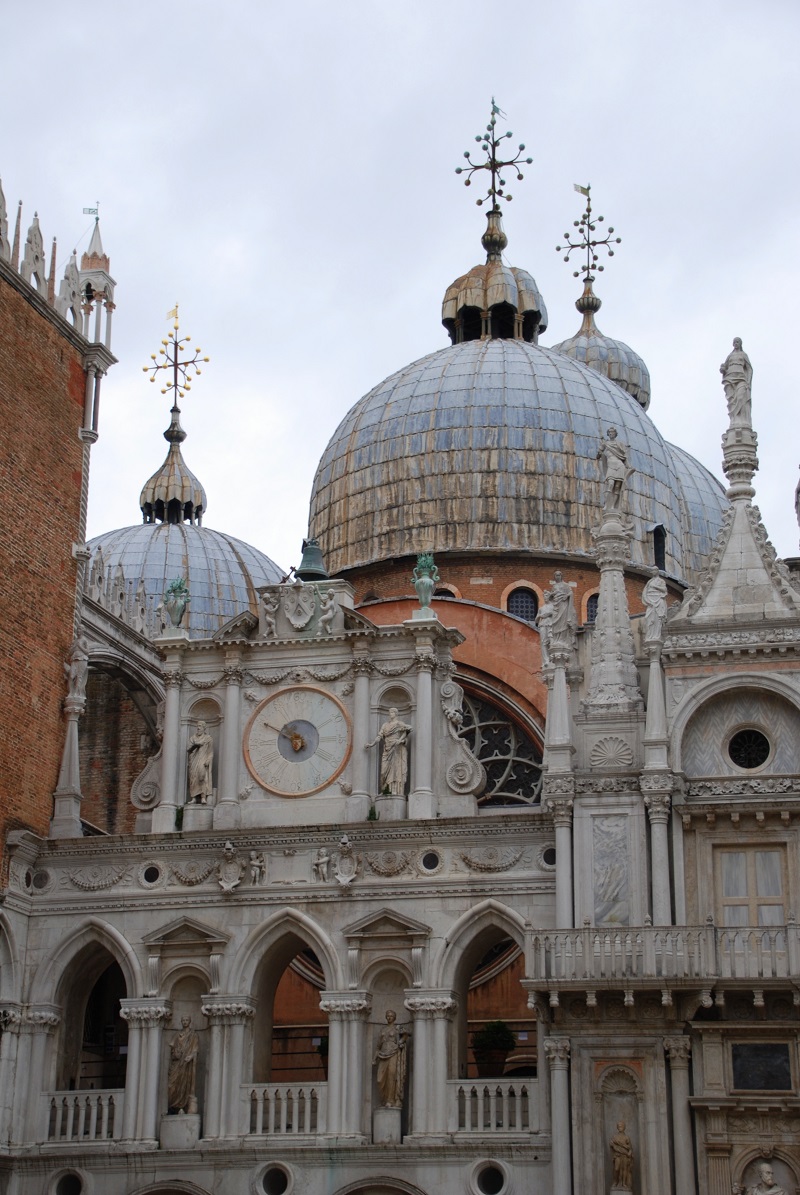
Of course there are too many people in Venice. On the Ponte Rialto, visitors from India cross selfie sticks with the Chinese as if they are swords and pickpockets must have lobbyists working city hall to get a spot in the area because it just seems such a safe bet that in that line of work you can earn a very healthy living here. But even in season, it only takes a few turns and you are in a neighborhood of quiet streets and alleys, lined with pastel-colored houses hundreds of years old, an occasional view of a narrow canal opening up as you venture further into the medieval maze. Venice is always, always, worth your time. This week’s visit was very short, I knew the cruise ship I was on would leave with or without me.

Santa Maria Formosa
Santa Maria Formosa

I practically ran from the Piazza di Roma to my first destination: a cheese shop I had found online right across a canal from the Santa Maria Formosa, a church with a  split personality: it has a well-proportioned baroque facade on the north side, but on the side facing the canal and the cheese shop, it looks like a Renaissance church. There is a generation between the two facades. The tower is the best part of the complex: it has some very robust, simple patterns that segment the structure and give it a certain visual rhythm. They did towers quite well in Venice, centuries ago.

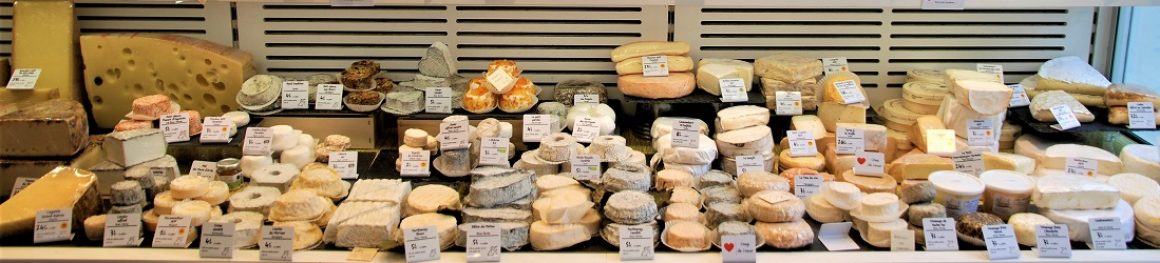
Prosciutto e Parmigiano’s website is in two languages and raises the specter of a slick experience, but I was pleasantly surprised: the owner spoke some English, but body parts other than our mouths had to be deployed frequently to ensure that I got what I thought I wanted: some buffalo mozzarella di campagna (try it and you’ll immediately understand why these globs of cheese candy usually are finished off in a single seating); a piece of straw-coated Tuscan Pecorino, and a thick slice of Asiago, the sharpest Provolone Stagionato I have ever tasted, and a piece of Vezzena di Lavarone.

Casa del Parmigiano Venice
Giuliano Aliani at work in his store

With my singular mission (get the cheese) accomplished, I began my quest back to the Piazza di Roma across the Rialto Bridge through the maze of water and stone. And that’s when Venice kept its promise: in the Campo Cesare Battisti già della Bella Vienna (really, you still ask what is in a name?) I stumbled across the Casa del Parmigiano, Giuliano Aliani’s cheese shop, and – but of course – I got even more cheese. A piece of bright yellow Piacentinu Ennese, given its unusual color by adding some saffron to the cheese (it also has peppercorns); the Pannerone Lodigiano that became the cheese of the week, and the Montasio Friulano.
Scuola Grande
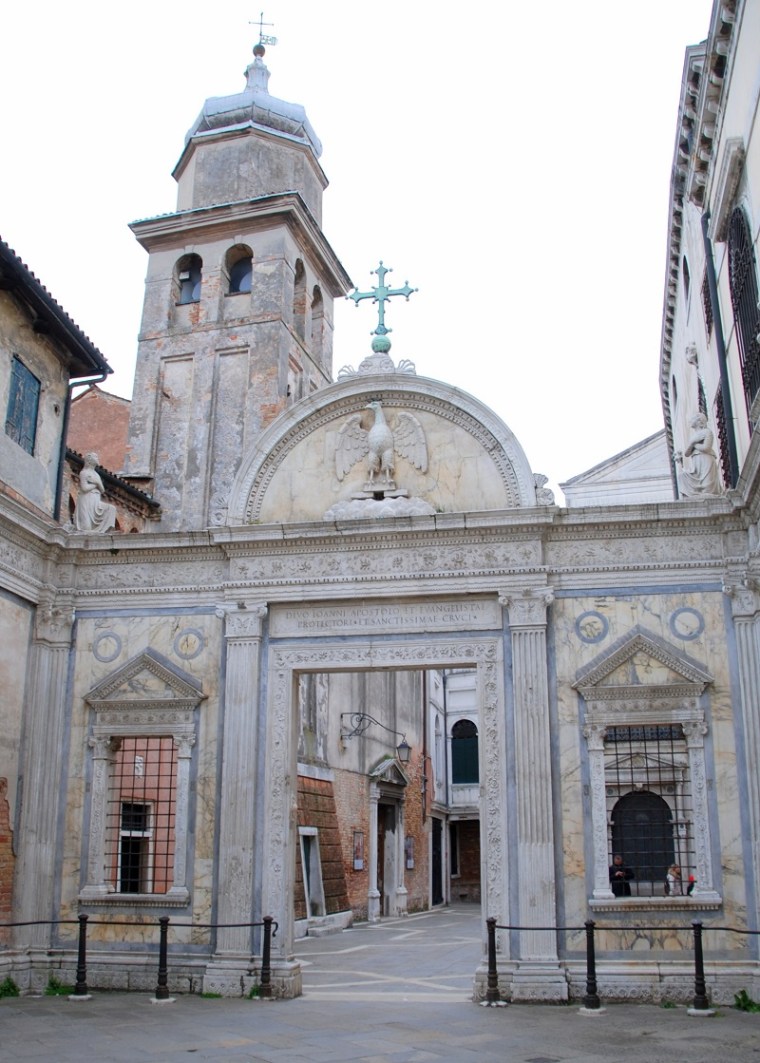
Venice – a surprise in every street. The Scuola Grande di San Giovanni Evangelista

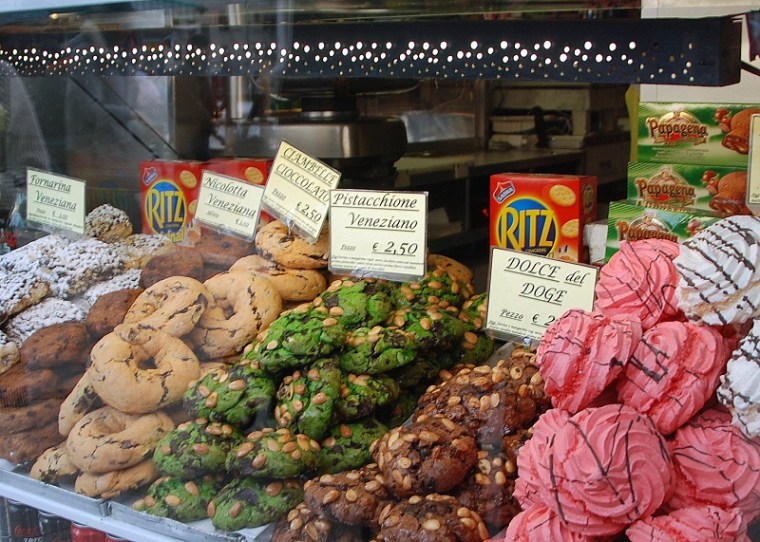
And a little closer to my destination I came past the beautiful courtyard of the Scuola Grande di San Giovanni Evangelista, the building of a religious organization which used to house a piece of the true cross of Jesus. Of course, so many of those pieces existed that the cross poor Jesus carried up Golgotha hill must have been absolutely humongous. The initial inhabitants were so-called flagellants, people that would viciously whip their own backs in a gesture of penance during certain celebrations. Right after this place was founded the city, wisely, outlawed this gruesome practice: who wants blood spraying through the streets? The courtyard has a beautiful Renaissance gateway, dreamed up by architect Pietro Lombardo near the end of the 15th century. After some time looking around I returned to the ship, picking up some rolls and pan pistacchio on the way. With more than half a dozen cheeses in my bag, I was destined for a cheese-arama…
Pan Pistacchio
Venetian Pastries

Pug’s Leap Samson – cheese for the dogs? (Week 22)

Pug's Leap II
Clockwise from bottom right: Pug’s Leap Samson, Estero Gold Reserve and Buffalo Blue

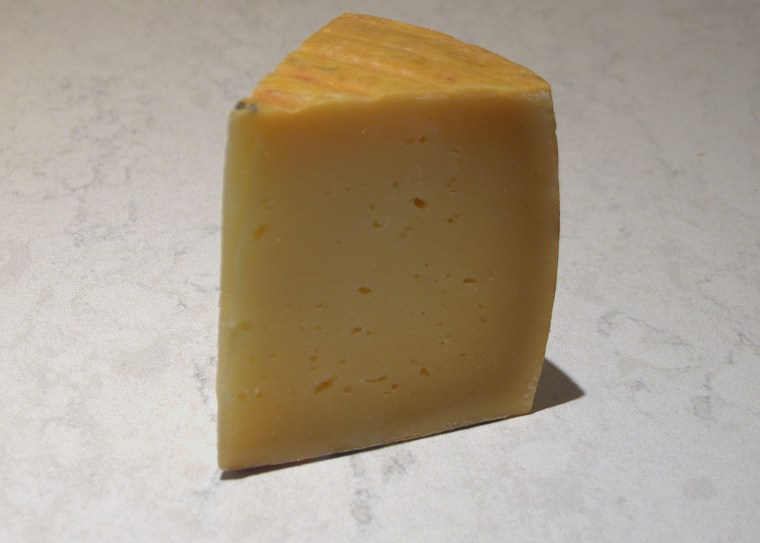
Cheese: Pug’s Leap Samson

Producer: White Whale Farm

Where: Petaluma, California

White Whale Farm is in Petaluma, not far from where Christine and I spent a fabulous weekend in the winter of 2014 on Tomales Bay. Had we only known at the time, we would have visited Anna Hancock and her happy goats (admit it, those are some happy looking goats). Alas, we were unaware at the time, so we had to make do with oysters and a selection of cheese from the Cow Girl Creamery.

Samson is the name of one of the two dogs that look after the goats. I don’t know about the dogs, but the cheese is just great. It is definitely a goaty cheese (go figure) but it has had a chance to ripen and develop its flavors which just makes it an all-around wonderful cheese. There is salt, sweetness, a bit of mushroom and a bit of funkiness (just enough). The goats are Saanens and Alpines, with a few other races thrown in for good measure. Both the former are known to be high producers. The dairy, in an 1867 barn, also is home to pigs and chickens – Christine and I will have it on our NoCal list of things to do, because it sounds just wonderful.

The picture at the top also shows the Buffalo Blue from Bleating Heart (see Week 26) and the Estero Gold Reserve from Valley Ford Cheese Company, from Valley Ford in California, not far from Petaluma on Pacific Coast Highway. The latter reminds me of a mature Dutch cheese, what we’d call ouwe kaas. Excellent cheese – I’ll know where to find you folks, next time I am in the neighborhood.

Not really related to the White Whale Farm, but very much on the theme of happy goats is the below video, made at our favorite Dutch goat farm, the Mèkkerstee near Ouddorp in the southwest of the country, where they have mainly Dutch White Goats with some Toggenburgers mixed in. They installed some rotating brushes in the stable (think carwash), which make the animals very, very happy. Fun for goats.


Mua (Week 23)

Mua II
A kiss is just a kiss, but a cheese is so much more….

Cheese: Mua

Producer: Son Mercer de Baix

Where: Ferrerias, Menorca, Spain

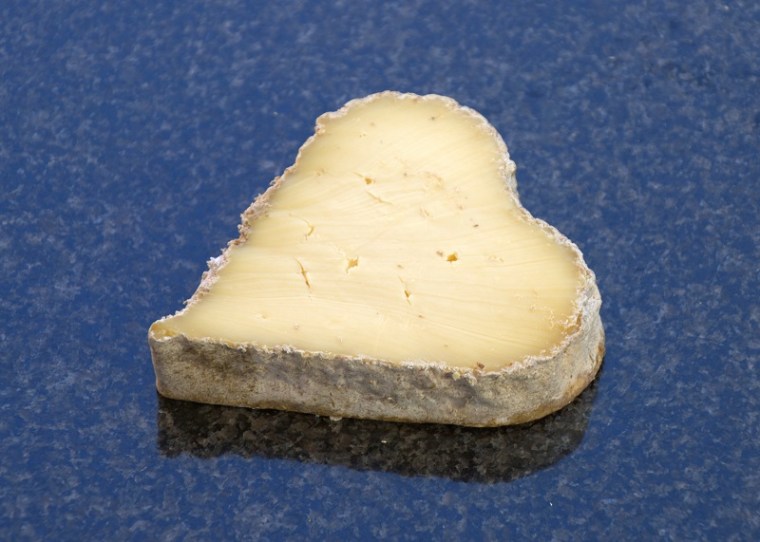
Mua (think ‘hmmwah’) is supposedly the onomatopoeia of the sound of a kiss. Yes, I just wrote onomatopoeia, and I freely admit that I had to look it up. In essence, it is a word that mimics the sound of what is described. So in Spain, a noisy smack on the cheek sounds like Mua, and Mua becomes a word to describe a kiss. Or a cheese, in this case. It comes in the shape of a heart, wrapped in a white paper dotted with red lips (“Mua!, mua!, mua!, mua!, mua!….).

Mua II
Wrapped in kisses

The cheese comes from the island of Menorca, which has a very long tradition of cheese making: Spain’s famous Mahón cheese is from here, the Mua is a very recent addition to the cheese palette of the island. The milk for this cheese is produced by the Holstein or Menorquina cows that are largely allowed to roam in freedom over the pastures of the windswept island.

Mua I
Mua with chamomile

It comes in two varieties and mine had its white rind covered in crushed chamomile flowers, which gave it its very unusual flavor. The paste of the cheese is supple with a bit of a bite and very smooth. It is aged for a minimum of 45 days, which is enough to allow for a lot of flavor development. Mua with chamomile is a real standout, not something you’d find just anywhere.

Manchego II
Mmmmanchego

I also picked up a piece of smoked cheese, the San Simon da Costa, which is protected with a DOP. It has a distinct smoky flavor and a sticky, dense paste which is very creamy. And of course, a piece of Manchego, that most Spanish of cheeses. Given its bold, well-rounded flavor, it is not difficult to see why Manchego is such a favorite. It is a hard cheese, but still very smooth and not all that crumbly. While some sheep’s milk cheese gets quite sharp with age, the Manchego is robust but never all that sharp. A king among the sheep’s milk cheeses.

Manchego
Con leche cruda, klaro

Madrid (Week 23)

Plaza Major
Madrid’s Plaza Major

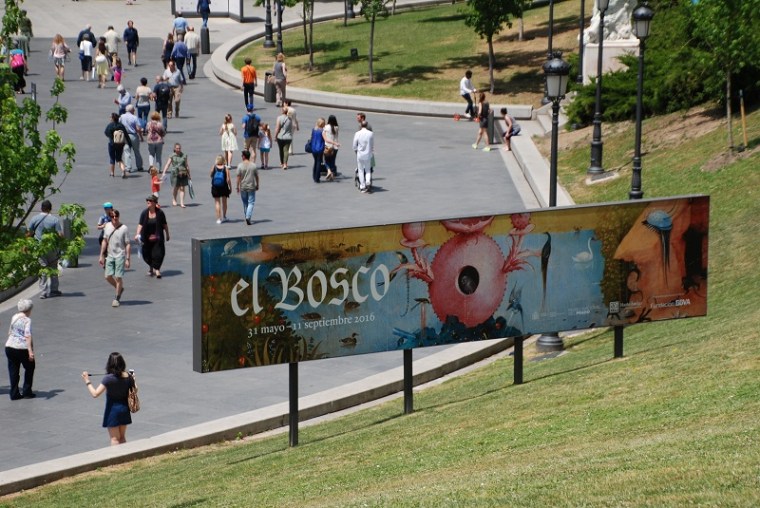
Oh boy, Madrid is hot. In July and August, the highs are routinely in the 90s but I was there in June and I was dripping my way around. I ended up here because of Fernando Álvarez de Toledo, 3rd duke of Alba. No, I was not going to meet him for some tapas and a glass of sangria. He’s dead, and that is not such a bad thing. First off, he would be 508 years old and probably reeking a bit. Secondly, he was a meanie. When my people revolted against Spanish rule, that nasty King Philip II (we hates him) sent the duke to the Low Countries where he truly unfolded all his potential to be a monumental ass. And then, to top it off, he was a thief. He stole all kinds of things from the Nassaus, the family that led the revolt and among the pilfered goods was a triptych by Jheronimus Bosch, the Garden of Earthly Delights. According to at least one historian, the duke of Alba had the secretary of the Nassaus, who knew where the painting had been hidden, pretty much tortured to death, so that he was able to take it and bring it to Spain. This is not where the sordid story stops. Apparently, a big reason to get the painting was that his lord was very fond of the work of the Dutch master, and now he, Fernando, could come home to Spain with one of the best things Bosch had ever painted. His Dukeness, so the story goes, always felt somewhat underappreciated by the king, whose bacon he saved again, and again, and again. In your face, you ungrateful monarch! I have the best Bosch ever!

El Bosco in Madrid
Jheronymus Bosch at the Prado. His name is not El Bosco, no matter what the Spanish say

Alas, it did not last. Eventually, the triptych became part of the royal collection and therefore, I had to go to Madrid to see it. On the occasion of the 500th anniversary of his death, the Prado threw El Bosco a party in the shape of a major exhibition. This was my second one after Den Bosch so I am having a good Bosch year on top of a good cheese year. The Prado exhibit was, admittedly, more impressive than the one in the Noordbrabants Museum. And even if my main reason to visit the Prado was Bosch, there is a mountain of other art to see there: Goya’s pinturas negras, some splendid works by El Greco, and enormous amounts of lush nudity in the numerous works by Peter Paul Rubens, that cheeky purveyor of 17th century super-soft porn.

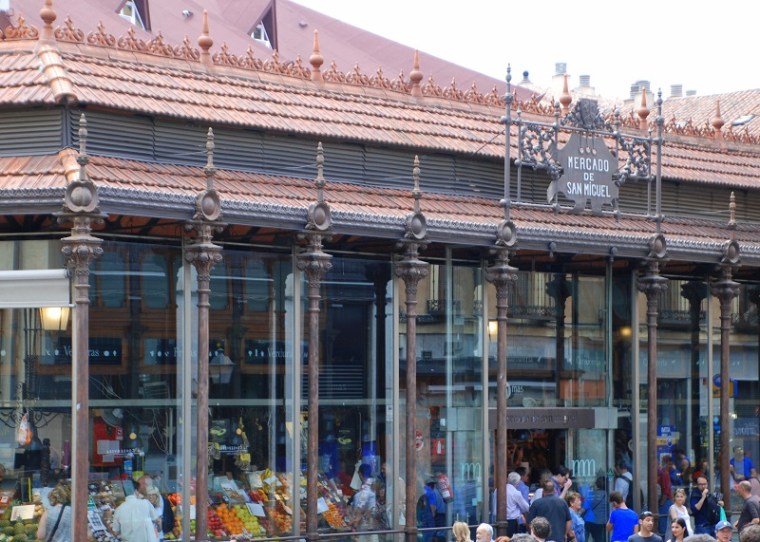
On my way to Portugal, I had to change planes in Madrid, so I added a single day and for my very brief time, I decided I could reasonably spend the afternoon pursuing cheese after overloading on that other culture in the morning. Initially, I was to go to the Poncelet cheese bar near my hotel, but that was closed by the time I got there, because I ended up wandering the old city for much of the afternoon. So after I had already spent a bit of time at what had become my favorite place in all of Madrid – the Mercado de San Miguel – I went right back there, for more food and more cheese.

Mercado de San Miguel
Food Temple in the Heart of the Old City

I had already picked up a bit of cheese tapas-style, at Mya, a cheese stall that sells portions of the best Spanish cheeses, but also a lot of international ones. The covered market is, yes indeed, a highlight for tourists and, yes, quite gentrified, but still: it is a delight for the senses – all of them.

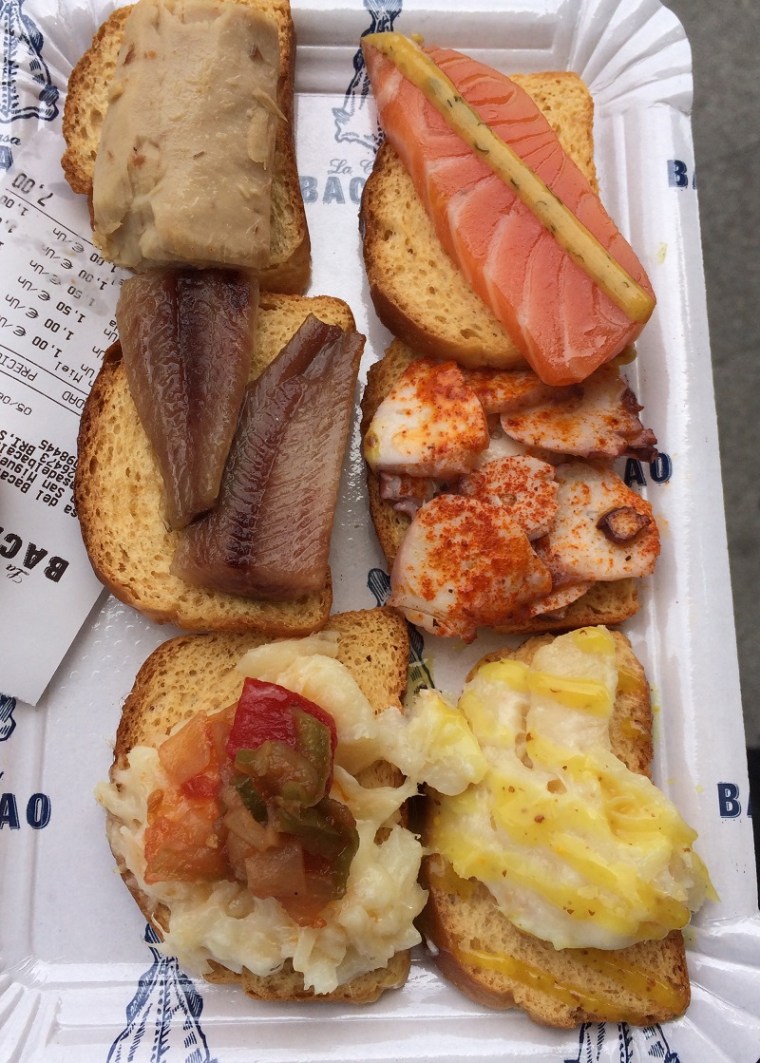
Fish Tapas Madrid
Oh inventors of tapas, we bow before you!

The smells obviously are incredible, as are the flavors. But on top of that, the food looks gorgeous and the place is just teeming with activity and noises. Before I went for some cheese to take with me to my hotel room, I decided to have some other foods as well, and I settled on a stand that sold all manners of seafood.

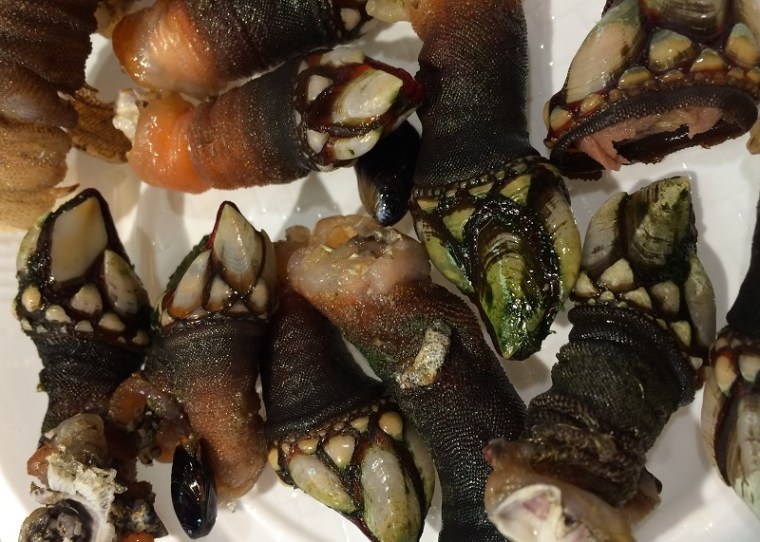
Barnacles
– Um, what are those? – Barnacles. – sure, I’ll have those. How do you eat them?

Here, I had to try to barnacles, which are such strange-looking shellfish that they practically dare you to eat them. I also tried some smooth clams and washed it all down with a glass of crisp dry white.

Inside Mercado de San Miguel
In the Mercado de San Miguel

I then headed to the cheese place, got a piece of San Simon da Costa, a smoked cow’s milk cheese, a chunk of Manchego, a hard sheep’s milk cheese and half a Mua, the 23rd cheese of the week – see my post for that one. I returned to my hotel by metro, which is a rather ugly (think bad 1970s-colored tiles) but very clean and safe way to get around in Madrid. Perfect also because it is underground and air-conditioned – so the dripping can be brought under control.

Porto (Week 24)

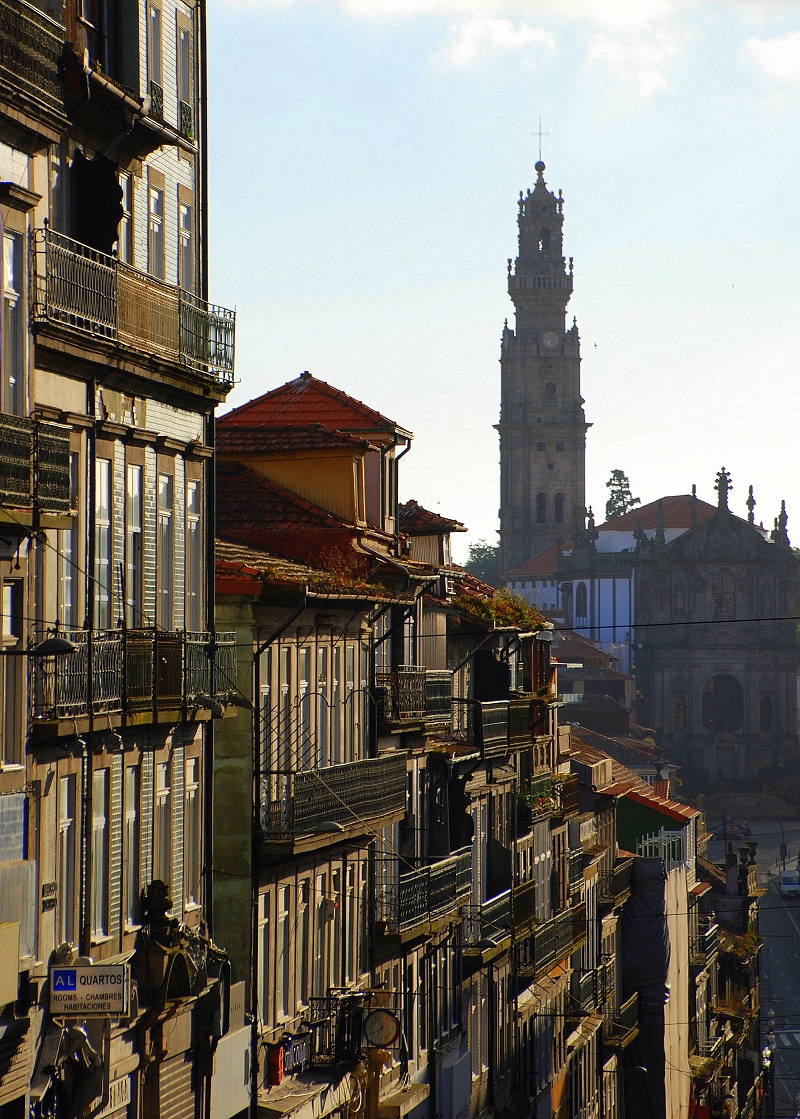
We all know someone in our circle of friends and acquaintances who is like this: you come to visit and one of the first things they’ll say is: “Oh, never mind all the stuff lying around, I meant to tidy up, but…” And you pick up a stack of magazines to sit down on the couch. And never once does this entry give you a sense that you are not welcome, on the contrary: you are welcomed into someone’s home and there is no pretense, no tension, no attempt to keep up appearances. Porto is like that. It is rough around the edges, it has some buildings that are starting to fall apart, and some that are much further along on their inevitable way to oblivion. There are also corners with new life, new vitality and high hopes. Most of all, it is a city that feels lived in. Who has time to clean up every last little bit of the house when you need that time to live? Cascading down from its hills to the banks of the Douro River, the streets of Porto are not for the fainthearted and here and there they turn into stairs. One of the hills is crowned by the cathedral, the Sé, another by the Torre dos Clérigos, at 249 feet the tallest church tower in Portugal. It was designed by Niccoló Nasoni, along with the church attached to it. Nasoni, an Italian who spend the better part of his life in Portugal, was directly or indirectly responsible for much of baroque Porto. A third hill is home to city hall, the Câmara Municipal.

Igreja de Santo Idelfonso
Igreja de Santo Idelfonso

And then, there are churches everywhere, many of them clad in the typical tiles, the azulejos, which sometimes just cover walls in simple patterns, and in other places combine to create huge panels telling epic stories. Many ordinary houses are clad in the former, the best examples of the latter may be Porto’s main train station, the Estação de São Bento and the igrejas (churches) do Carmo and de Santo Idelfonso.

Livrario Lello
Livraria Lello

Porto has a world-famous bookstore which, like Tom Cruise, is much smaller in real life than in the pictures. Livraria Lello routinely ranks as one of the most beautiful bookstores in the world and it gets so many visitors that they have started to charge an entrance fee: 3 euros, good as a credit towards any purchase you make. One can frown on this of course, but shouldn’t a long line to get into a bookstore be reason for rejoicing? Though it wasn’t as big as I imagined, it is still a pretty cool bookstore, even if I think Dominicanen in Maastricht has the edge. You can be the judge, see below.

jo-Maastricht-Dominicanen
Dominicanen Bookstore in Maastricht, the Netherlands

I stayed in a beautiful little hotel in town, Porto A.S. 1829. It is located in a building that for 5 generations was home to a family owned shop for stationary, pens and paper of all kinds. The hotel still has a gift shop with a very strong focus on just such items, and on my floor, there was a display in the hallway showcasing two old typewriters. The room itself was small and it still reminded me of an old office. I had a view of the Sé and the streets below – unbeatable.

Pasteis
Pasteis, pasteis, pasteis….

I spent my time making miles to get to know the city, which takes a bit of stamina, but it otherwise unproblematic, at there are myriad little restaurants, cafes and shops that provide all kinds of sustenance.

Sao Francisco Porto II
Igreja de Sao Francisco

An almost bizarre highlight in Porto is the Igreja de São Francisco, on the edge of Ribeira, the quarter along the river with the narrow streets, the laundry hanging from the windows and the plethora of restaurants that served grilled fish. I am not sure St. Francis, who was a simple man by all accounts, and who stayed away from luxury, would approve. The interior is largely carved wood that has been covered in gold – some sources claim total of 1000 lbs, although that sounds too round of a figure to be true. What is true is that as you walk into the church, it is almost overwhelming and perhaps even a little obscene. But hey, I am a big fan of churches and this one easily makes my top ten. I get it, hundreds of people could have been clothed and fed with the money had they simply painted the wood, and it does on occasion give me pause. But honestly – look at all that GOLD !

Porto Houses
Porto Houses covered with Azulejos

It would be easy to fill another two posts with the things one can see with the assistance of some serious leg power and good shoes, but I will not try to be exhaustive, even if I ended up exhausted. Porto is something you need to experience. Just go there. And don’t miss the gold.

Claremont (week 22)

Donut Man
The Donut Man in Glendora

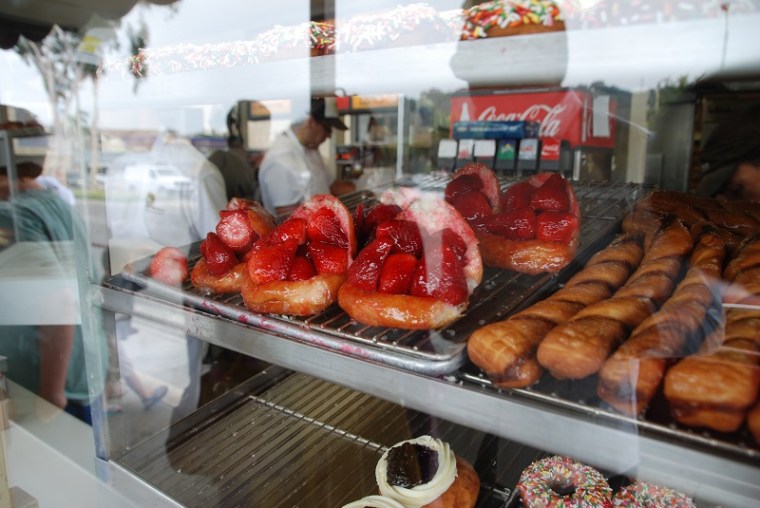
This week, we traveled. Not very far, but still. The 605 Freeway does not look like an Tuscan country road or a two-lane highway winding over the hills of Burgundy. But our goal was the L.A. version of something you’d look for in those more exotic locales halfway around the world: someone with an idea to make the best food he could think of, and who then turned that into a career. Jim Nakano is such a man. Since 1974, he has been making donuts in a non-descript little place on an absolutely forgettable stretch of Route 66 in Glendora, about half hours’ drive east of Downtown L.A. At some point, he made a deal with a local strawberry farmer and began to produce strawberry donuts: tasty doughballs overstuffed with fresh strawberries. Nakano’s store, the Donut Man by now is a part of local folklore, and was featured in an episode of California Gold, hosted by the late, irrepressible Huell Howser and, more recently, in a little video by our favorite food critic, Jonathan Gold. In fact, he has become so popular that recently, some I-don’t-get-all-the-hype detractors have appeared on the scene. The three of us do get the hype. Not far into the first bite, we agreed that the strawberry donuts alone had been worth the hour-or-so drive out to Glendora. The strawberries were firm and juicy, with light glaze, the donut was fresh and fluffy and the glaze here too was restrained, so that the tastes of fruit and fried dough were not crowded out.

Fresh Strawberry Donuts
Tasty Treats, truly

Our next stop today was Claremont. Christine lived in this town for a while and she loves coming back here, it is easy to understand why. Most houses have a lot of charm, there are old, towering trees that provide shade, and they come in all shapes and sizes, and the colleges lend the place a great amount of flair.

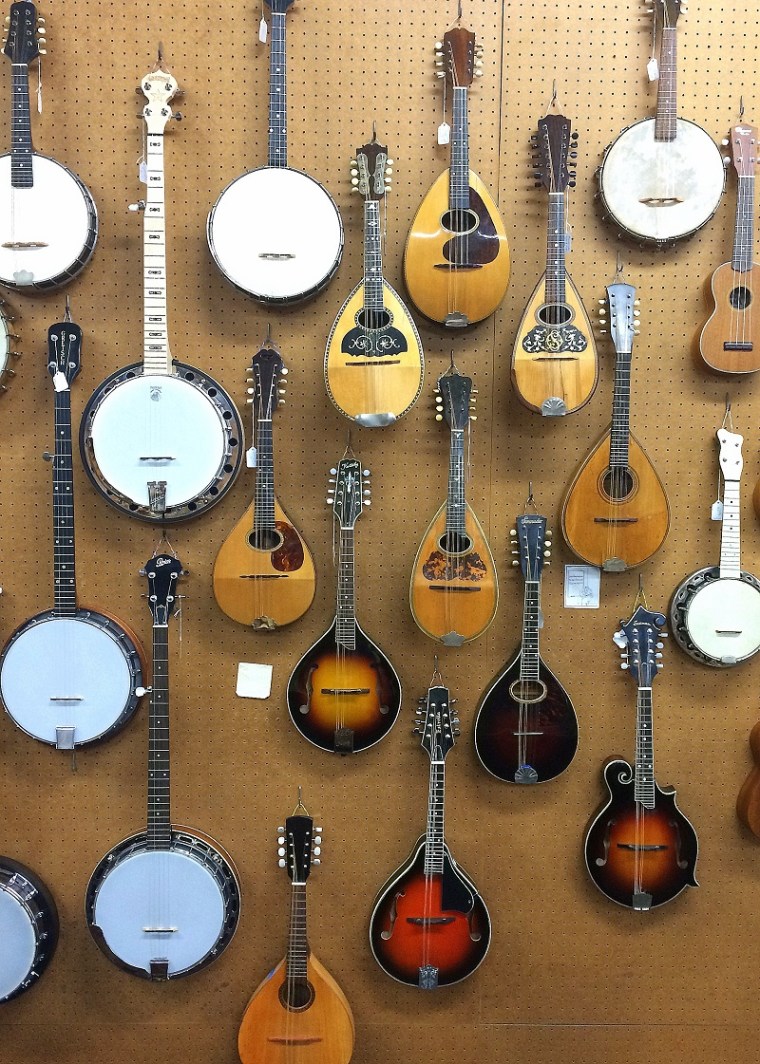
Folk Music Center Claremont
The Folk Music Center in Claremont

We strolled the main drag through town, peeked into a few of the unique stores such as the Folk Music Center and Rhino Records, and finally walked into the Cheese Cave, the second purveyor of delicacies of the day. In my post about cheese shops in LA, there is more about this place – for now it suffices to say that we left after spending 30 minutes and a few bucks north of $80 with cheese and a host of other items, both edible and non-edible, that surely would make our lives better. Yes, it is that kind of a store.

Claremont Cheese Cave
Blue cheeses at the Cheese Cave

After carefully storing our precious purchases in the cooler bag (on the house from the nice Cheese Cave people!) under a seat in the car, we went for a walk through the colleges and we ended up spending a lot of time deciphering the graduation graffiti of every class since 1931 on what has been dubbed Graffiti Wall at Scripps College.

Scripss College Claremont
Graffiti Wall at Scripps College

More food was on the program in El Monte, where we had dined a few years ago in a small hole in the wall restaurant that had spectacular Mexican food. We found the address with only one wrong turn, but alas, it had new owners and we immediately felt guilt for not returning sooner. We were sure we could have kept the restaurant from going out of business, and if they had left for a better location, we would have known where they were. Regrets, bitter regrets. Undaunted, we still sat down at the new placed, Teresia’s Mexican Grill (careful, the website starts playing happy Mexican music) and ordered from the new menu; Christine had Aguachiles (supposed to cure hangovers), a dish made with shrimp sprinkled with lots of lime juice, onions, cucumber, and avocado. We shared some Queso Fundido, melted cheese with Chorizo, I had chicken in mole, Charlie ate shrimp tacos and we all shared a ridiculously large Buñuelo, a fried pancake, in essence, with cinnamon, sugar and topped with chocolate sauce.

Cheese & Chorizo
Queso fundido and chorizo

Even if it wasn’t exactly what we had dreamed of for the last few years, it was fresh, surprising and pleasing and altogether much too much so we left content and in the knowledge that the Champions League Final between Real Madrid and Atletico Madrid had just gone into overtime. We watched the final minutes tick away with the chef – the restaurant was empty except for us, so he was able to tend to the important matters in life. By the time we came home we had spent considerable time on the ugly (if efficient, on a Saturday) Southland freeways, but all three of us agreed that we should consider ourselves lucky to live in the ethnic patchwork of LA, where new food adventures are just waiting to be discovered everywhere, as long as you take the right exit.

Tumbleweed (Week 10)

San Joaquin Gold & Tumbleweed
Top: Tumbleweed. Bottom: San Joaquin Gold

Cheese: Tumbleweed

Producer: 5 Spoke Creamery

Where: Goshen, New York

I picked up 2 cheeses at C’est Cheese in Santa Barbara, and while I really did like the San Joaquin Gold, I thought the Tumbleweed was the winner in this match. I got a somewhat strange stubby piece that allowed me to cut it up in very thick slices and it went surprisingly fast. Tumbleweed is made with raw milk from grass-fed Holsteins and your tastebuds have to put in overtime to take it all in: it’s buttery, nutty, a little sweet and it somehow never ends. There is just a lot of flavor to be savored. I am sure it pairs great with a robust red wine (this cheese can easily take on a robust Bordeaux or so), I say leave it. Just have nothing but bread and cheese here – there is enough to keep your senses entertained.

Tumbleweed is made by the people at 5 Spoke Creamery in Goshen, in the county of Orange in the state of New York. Their name and their logo feature spokes in a bicycle wheel. The bicycle in turn is a symbol for taking time to do and to enjoy things. Their cows, Holsteins, are grass-fed and the milk used for cheese is raw. The website extolls the virtues of unpasteurized milk and they point out that 70% of all European cheese is raw. The cheese is aged up to 12 months and that of course helps the taste truly unfold. The creamery is in a farm that is over 110 years old but has been renovated to house a state-of-the-art sustainable operation that cranks out the dairy gold. Alan Glustoff owns 5 Spoke and you can see him at his farm in this video.

By the way, just because in my very informal taste test the San Joaquin Gold from Fiscalini’s came in second, doesn’t mean you shouldn’t get some if you can lay your paws on it. They’ve been in the cheesemaking business for over a hundred years – and this particular cheese has a cow stamped into it – what is there not like ?

C'est Cheese
At the Cheese Counter in C’est Cheese

Santa Barbara (Week 10)

Santa Barbara Pier
Santa Barbara’s Sterns Wharf

To us, Santa Barbara is always a treat. We have lots of fond memories (including a splendid little wedding and some heady college years) and we always come away as proud wannabes: one day, we say, we will be able to afford the overpriced real estate here, and the Californian Riviera will be our oyster. Until that day, we are happy to make the trek on a regular basis, and in the cheese year, we obviously had to visit C’est Cheese, the wonderful cheese store and café with an admittedly cheesy name (Eurosnob trivia: c’est, in French, is NOT pronounced ‘say’).

benedict c'est cheese
Breakfast at C’est Cheese

After a glorious breakfast, with great coffee, excellent breakfast potatoes, some of the best eggs Benedict I have ever enjoyed and friendly I-live-in-Santa-Barbara-so-I-really-have-no-reason-to-ever-be-crabby style service, a fine female cheese monger helped me pick not one, but two very nice, creamy cheeses, and we were off wandering the streets. It rained – not so strange in March – but that hardly mattered.

Carrots Santa Barabara Farmer's Market
At the Santa Barbara farmer’s market

We were reminded of the days before our wedding when rainshowers severely cut into the supply of fresh flowers at the farmer’s market. So in a way, through that memory, the rain drove us to the farmer’s market, where we procured an on-demand poem, written by a young woman with a typewriter who offered her services for a modest fee, and a jar of out-of-this-world raw avocado honey, too good to eat in any other way but by the spoonful. We also got some tangerines and then walked on. We stopped in at the Lost Horizon Bookstore, an excellent used bookstore that really requires a lot more time than we had, drove back to our hotel for a short while and went for another walk in the Douglas Family Preserve which affords views over the pacific and the Arroyo Burro Beach, with the restaurant that used to be the Brown Pelican.

Seashore Santa Barbara
At the Douglas Family Preserve

For dinner, we enjoyed the seafood at the Hungry Cat twice in a row. Yes, sometimes it is as simple as that: when the food is that good, why bother going elsewhere? The first night, there was plenty on the menu to choose from and we decided on the encore before we had finished our meal. Of course we ventured out to the waterfront at the harbor and at Stearns Wharf also – it is part of the tradition in Santa Barbara. All in all, we didn’t do an awful lot, but drove home along the Pacific Coast Highway very content and refreshed: Santa Barbara is good for our souls, we find.

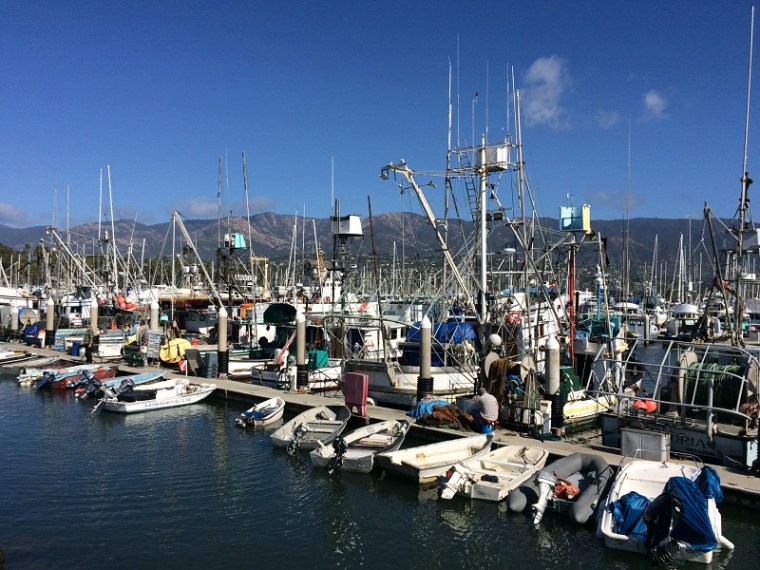
Port of Santa Barbara
Santa Barbara Harbor

Paški Sir (Week 15)

Paski Sir II
Croatia’s Cheesy Pride: Paski Sir

Cheese: Paški Sir

Producer: Sirana Gligora

Where: Kolan, Pag Island, Croatia

So here is a picture of Pag, an island just off the coast of Croatia. There are less than 10,000 people who call the island home, but there are some 40,000 sheep. They’re a little smaller than average, these Paška Ovca, and they are indigenous to the island. From the coastal Velebit Mountains of Dalmatia, the Bora wind barrels down, picks up a lot of salt from the air over the water and drops some of that salty moisture on the pasture where the sheep run around, mostly freely. The herbs and grasses on the island the sheep feast on are pre-salted, if you will, like the grass in coastal Normandy around Issigny, where the best butter in the world comes from. These roaming sheep produce about half a liter of milk a day, so half a quart of milk. That is little, even by sheep standards (half a gallon is sort of average, compared to three quarters of a gallon from a goat and 8 gallons from a cow). Add to that the fact that the sheep are still often milked by hand in the fields where they graze and you have one labor intensive dairy operation going. But at the end of that long laborious process, there is Paški Sir, the cheese from Pag, which wins medals all over the world and makes Croatians proud.  Depending on who you believe, the farmers on Pag have been making cheese for hundreds of years (some writers believe since the days of the old Romans) and of course there is the popular suggestion that at one point it was used as currency, which seems a little farfetched. I am sure it may have been a barter unit in some sense, but it is hard to see that someone would buy a cow and say: “I’ll pay you 34 cheeses for that nice animal there”. One way or another, the cheese from Pag has very, very deep roots. Alberto Fortis, an Italian who traveled around Dalmatia in the 18th century wrote about the salt, the sage honey, the wool and the cheese from Pag in his Viaggio in Dalmazia, but by that time, it had already been around for a good long while. The Gligora family has been at it since 1916 and towards the end of the previous century father Ivan and son Šie have begun to take, as they say, the cheese to the next level. Among other things, they send their products all over the world provided you’re happy to pay the rather splendid shipping fees. You may find that is it more prudent to just wait until you travel to Croatia to get some. A competitor, Paška Sirana has an excellent video. Great images, and with English subtitles.

Paski Sir Cheese
Vino, Kruh i Sir. The cheeses from left to right: Kozlar, Dinarski and Paski Sir

Paški Sir is a cheese that needs a bit of time to unfold in your mouth, don’t eat it hastily. At first, it is what you’d expect from a sheep cheese: it is hard, crumbly and drier than most cow’s milk cheeses. And then, as it melts in your mouth, your tastebuds tell you: “wait, wait, there is more”. I will leave it to experts to give the complex flavors names; I will simply say that there is a lot to savor in an innocent looking piece of Paški Sir, and only if you take your time, will you discover why it gets those accolades the Croatians like to tout. I am sure it tastes great in a variety of dishes, but it is expensive enough that you want to carefully cut it up and eat it with a glass of Croatian red rather than in the mac and cheese from the crockpot. It has a nice crunch – most if it hits the market after aging for about a year so there are the little white protein crystals that lend the cheese even more texture. Shave it on your salad like you would Parmigiano, or eat it with figs – if you can get them, from Dalmatia. Aside from the Paški Sir, I also had a taste of Gligora’s Dinarski Sir, a crumbly, salty cow’s milk cheese from the Dinaric Alps and their Kozlar, a semi-hard goat cheese, also quite salty but very creamy and if fact, I ended up liking it at least as much as the cheese of the week. But I waited until we had left Croatian territorial waters before admitting that aloud. I am sure the Croatians would seriously frown on my preference and I wanted to stay out of trouble.

Dalmatia (Week 15)

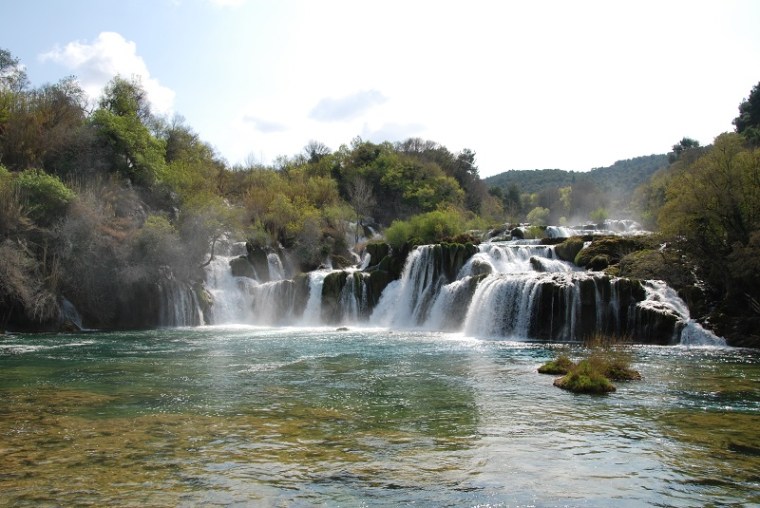
Krka Waterfalls
Waterfalls in Krka National Park

Of course, if I would title this post Croatia, it would just be a bit too easy. Dalmatia is much cooler, because it is a little less used and has a faint echo of dog to it. Yes, those spotty white dogs do come from this part of the world, originally. The bit with the 101 of them originates in England: a playwright by the name of Dodie Smith wrote the book, Disney turned it into a movie 5 years later. But back to Dalmatia. This week, the cruise ship I was on stopped there twice, first in Zadar, then in Dubrovnik. Zadar is a city as old as dirt, at least 2,900 years or so. They have ample old stuff to prove it too: there is a roman forum, the church of St. Donatus that is a cool 1,100+ years old and massive fortifications because a lot of people over the centuries have had their eye on Zadar. Alas, I did not see any of it, because I traveled by bus to the nearby Krka National Park which is know for some pretty impressive waterfalls. They are near the town of Skradin and the locals call them Skradinski buk. There, now you know that ‘buk’ is Croatian for waterfalls and the number of situations in which this knowledge will come in handy are legion. Water here flows over a series of travertine terraces and some very easy walking trails take you by a handful of historical structures, meticulously restored, and over, und and past myriad waterfalls. Best really to look at the pictures, they do the place much more justice that words can. Back in Zadar, there was just enough time to have a listen of the Morske Orgulie, a water organ designed by Croatian genius Nikola Bašić. He put 35 big pipes under a terrace at the waterfront and as the water moves in and out of the tubes, it creates some very random low whistles. Time was tight, but I could easily imagine sitting there for quite a while just letting the seas sing to you. It was beautiful. Bašić also created the roundish array of solar panels, which collect the light of the sun and gives it back during the evening and night in constantly changing colors. Two intrepid fellow travelers did stay behind in Zadar and we so kind to get me some bread, a bottle of Dalmatian red wine and three pieces of cheese from the Gligora cheese shop. And that can only mean one thing (wait for it….): week 15’s cheese had to be Paški Sir, the sheep cheese from the island of Paks, just off the Dalmatian coast.

Easter in Dubrovnik
Easter In Dubrovnik

Further down along that very same coast is Dubrovnik, probably the most visited city in Croatia by a wide margin. This is not just because it is such a popular cruise stop: Dubrovnik, with its massive medieval walls, its bright, wide and clean streets and its friendly people is a three dimensional postcard in many ways. Like other living and breathing cities, it has flaws and imperfections, but there are moments, such as on Easter Sunday when there was a stage with costumed dancers and musicians in front of the 16th century Sponza Palace, where you could be forgiven for thinking that you are actually in a really well done version of the EPCOT center – Dubrovnik is almost too perfect.

St Blaise in Dubrovnik
St. Blaise atop his very own church

Across from the modest palace is the church of Sveti Vlaho, St. Blaise, the patron saint of the city, a very elegant baroque church and between them stands Orlando’s column, with a bigger-than-life-size statue of a medieval knight who, according to legend, defended the city against the Saracens. Of course he did no such thing, but that’s too long of a story for here. Orlando and France’s Roland are one and the same person and in the Middle Ages, Roland/ Orlando became sort of a generic brand name for heroes of all shapes and sizes. The column, along with the surrounding buildings and the bell tower at the end of Stradun, the main street in Dubrovnik is the heart of the city. Not far from here is Rozario, tucked away a little behind St. Nicholas’ church. It’s a small friendly restaurant that serves splendidly simple fresh food at prices that are more than reasonable. Must…eat…their…marinated anchovies…

Dunbrovnik rooftops
Dubrovnik’s Rooftops from the City Walls

A few blocks further away in a street that runs parallel to Stradun is the place where you can get all the souvenirs you could ever want to bring home from Dalmatia, including ties with Glagolitic letters (yes, I have one of these and I will surely wear it one day. I will. I really will….). The shop is called Medusa and they’ll take all the money you want to spend on the local economy – they really do a good job in marketing Croatia. Not to miss is the Franciscan monastery from 1317, which houses one of the oldest pharmacies in the world that still functions as one – it goes back to that same year. Once you’re here, near the Pile Gate, the huge fountain is a curious landmark, and you are also close to a set of stairs that afford access to the massive walls, which you can walk all the way around town. They charge an entrance fee, and it is somewhat of a workout, but not doing it once you have made it this far is like – well – think about things where you are almost there and then, you retreat. You will leave Dubrovnik and always wonder how much more exciting your visit would have been with a walk along the walls.

Dubrovnik harbor
Dubrovnik Port

The harbor area, finally, is the best hangout in town. There is water everywhere, some teenagers jump into the azure waters from the rocks below the walls and there is a coming and going of small vessels, among them the tender boats of the large cruise ships. It is also the place to practice the most important word of the local language: sladoled. Ask for it, and ye shall miraculously receive ice cream. And the Croatians make some mean ice cream, just like their sheep cheese – more about that in another post.