Biermutschli – Made in Basel (Week 33)

biermutschli-ii
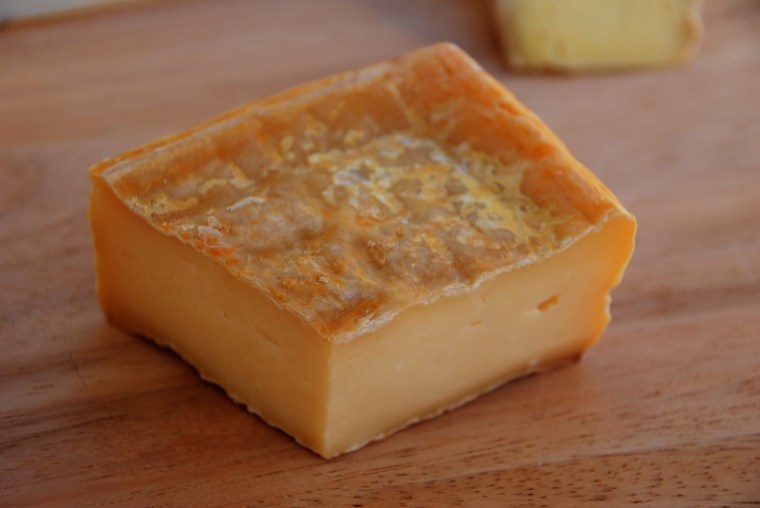
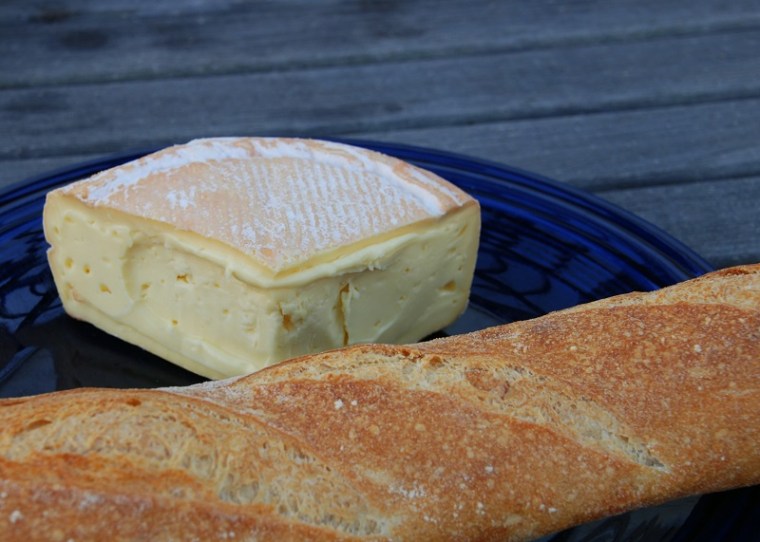
Mutschli+Beer+Hops+a little smoke = Biermutschli

Cheese: Biermutschli

Producer: Käserei Reckenkien, Familie Stoll

Where: Mümliswil, Solothurn, Switzerland

The Swiss buy Swiss. Of course they buy German cars and Korean cell phones. But when you go to any grocery store, it is very easy to find out where your food is coming from, and the information doesn’t just reassure buyers that they’re getting ‘made in Switzerland’. Often, the canton is identified as well, and I have seen cheeses with perky little signs that tell you the family farm whence the Käse came from, and this not just in high end cheese shops. Of course, it makes many things quite expensive, because anyone in Switzerland engaged in producing your foodstuffs is paid a decent wage, generous benefits and excellent but expensive healthcare. The Biermustschli is a case in point.

A Mutschli is basically a small round semi-hard cheese somewhere between one and 10 lbs (so much smaller that many of those huge wheels the Swiss roll down the mountains). And this particular cheese comes from the town of Mümliswil, about an hour from Basel. It is made of raw milk and the cows are fed grass or hay exclusively. In ripening of the Biermutschli involves washing the rind with beer and hops; they also smoke the cheese a bit. And the beer used is Unser Bier, literally ‘our beer’, which comes with a tagline that epitomizes the fondness the Swiss have for locally produced things: Bier von hier statt von dort – beer from here instead of from there. Unser Bier got started with a guy who brewed 18 liters of beer in a pasta pan – the rest is history. They create some unusual brews – their summer beer has elderflowers in it, and for the fall they do pumpkin beer.

unser-bier-mutschli
Mutschli and Summer Beer with elderflower

The guy with the crown sticking out his tongue in the logo of Unser Bier is Basel’s famous Lällekönig, the name for a mechanical device in the shape of a human face with moving eyes and a tongue that moved in and out. Originally, this could be seen on the Rhinetower, and it was connected to the clock on that tower, which stood on the city-side of the old bridge across the river. Eventually, the Tongueking (the character wore a crown) became quite famous and today, with the tower and the original Lällekönig long gone, there is a replacement on the facade of the restaurant at the city end of the bridge. The people on the Grossbasel side of the river like to think the King is sticking out his tongue in the direction of Kleinbasel (little Basel, formerly an independent suburb – across the water, think of Oakland), but there is no historical evidence that the person who made the machine wanted to do anything else that createan entertaining contraption – and he succeeded. And of course, today the red tongue is on the Mutschli, a delightful cheese that just has the perfect balance of smokey, yeasty, a faint touch of bitter and a lot of creamy body – we went back to the market square, to the Wirth cheese stand, a week after we hand a conservative slice to try it to buy our own whole Mutschli. Soon e Kääs!
Pannerone Lodigiano (Week 13)

Pannerone Lodigiano
“You don’t want this cheese, trust me.”

Cheese: Pannerone Lodigiano

Producer: Caseificio Carena

Where: Casella Lurani, Lodi Region, Italy

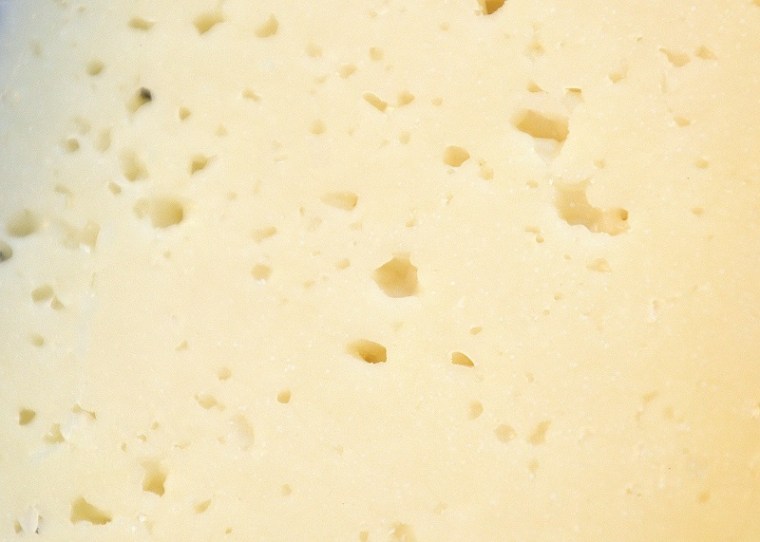
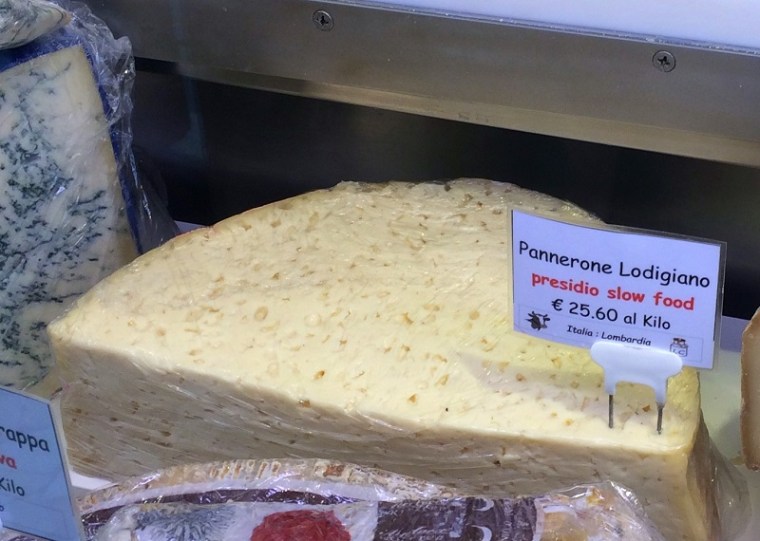
Just about 20 miles from Milan is a small town called Caselle Lurani and in that town is an easy to miss creamery that turns out this cheese, among others, that is actually on an endangered species list of sorts. Pannerone, a cheese made from afternoon cow’s milk (2% more milkfat, apparently, than the morning take) has a few things that make it unique, and give it an acquired taste which may be why it is not nearly as widespread as it once was. In fact, the creamery run by the Carena family is the only producer left. Pannerone’s (comes from panéra, which means cream) unique qualities come from an unusual production process; the whey is allowed to run off naturally, there is no pressing involved at all and that makes for a soft cheese. Then, it sits for four or five days at 28-32 degrees until all the whey has drained. No salt is added to the cheese, so the bacteria that are at work here are solely responsible for the flavor. The cheeses look impressive in the cheese counter, which is how I happened upon it: a cylinder is about 8 inches high and a foot in diameter. It has lots of little holes and a nice pale ivory color.

My next challenge was to get a piece, after I identified what I wanted. That went through the point-and-use-exaggerated-facial-expressions method, because even if Venice is inundated with visitors from abroad, a lot of merchants do not speak anything but Italian, and my Italian is non-existent. It was clear what the message directly aimed at me was to convey: ‘no, this is not what you want.’

‘But it most certainly is!’ said my English words and my facial expressions and my body language. The gentleman I spoke to decided to bring in the big guns, the owner of the shop, who reiterated: ‘bee-ter!’. I was certainly not going to like it. After this final attempt to dissuade me, I just had to have it, and the experience of finally sinking my teeth into it was rewarding: not that it would make it to the top of my list, but my buying the cheese over some local objection and then reading up on it made the tasting feel like the end of a journey.

Pannerone II
A cheese of many holes

It is creamy and a bit sweetish at first, but it does develop an unusual, mildly bitter flavor in the mouth soon afterwards. It could do with some fruit, to counterbalance the bitter taste, and that is a popular combination in many recommendations. Pannerone has a D.O.P designation and the Slow Food organization recognize it’s uniqueness as well – they are in fact the people talking about it as if it is an endangered species worthy of preservation. Things look good though, at the Carena Creamery: the descendants of Angelo Carena who passed on to that great dairy in the sky two years ago seem to have fun doing what they are doing, judging by the images on their website, adn a determination to carry on the good work, all the way down to the youngest members of the family. Great-grandpa would be proud!

Mua (Week 23)

Mua II
A kiss is just a kiss, but a cheese is so much more….

Cheese: Mua

Producer: Son Mercer de Baix

Where: Ferrerias, Menorca, Spain

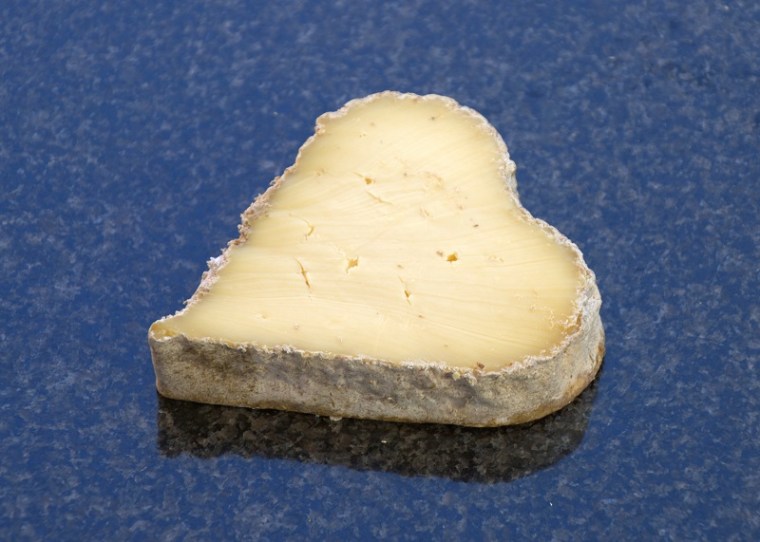
Mua (think ‘hmmwah’) is supposedly the onomatopoeia of the sound of a kiss. Yes, I just wrote onomatopoeia, and I freely admit that I had to look it up. In essence, it is a word that mimics the sound of what is described. So in Spain, a noisy smack on the cheek sounds like Mua, and Mua becomes a word to describe a kiss. Or a cheese, in this case. It comes in the shape of a heart, wrapped in a white paper dotted with red lips (“Mua!, mua!, mua!, mua!, mua!….).

Mua II
Wrapped in kisses

The cheese comes from the island of Menorca, which has a very long tradition of cheese making: Spain’s famous Mahón cheese is from here, the Mua is a very recent addition to the cheese palette of the island. The milk for this cheese is produced by the Holstein or Menorquina cows that are largely allowed to roam in freedom over the pastures of the windswept island.

Mua I
Mua with chamomile

It comes in two varieties and mine had its white rind covered in crushed chamomile flowers, which gave it its very unusual flavor. The paste of the cheese is supple with a bit of a bite and very smooth. It is aged for a minimum of 45 days, which is enough to allow for a lot of flavor development. Mua with chamomile is a real standout, not something you’d find just anywhere.

Manchego II
Mmmmanchego

I also picked up a piece of smoked cheese, the San Simon da Costa, which is protected with a DOP. It has a distinct smoky flavor and a sticky, dense paste which is very creamy. And of course, a piece of Manchego, that most Spanish of cheeses. Given its bold, well-rounded flavor, it is not difficult to see why Manchego is such a favorite. It is a hard cheese, but still very smooth and not all that crumbly. While some sheep’s milk cheese gets quite sharp with age, the Manchego is robust but never all that sharp. A king among the sheep’s milk cheeses.

Manchego
Con leche cruda, klaro

Tumbleweed (Week 10)

San Joaquin Gold & Tumbleweed
Top: Tumbleweed. Bottom: San Joaquin Gold

Cheese: Tumbleweed

Producer: 5 Spoke Creamery

Where: Goshen, New York

I picked up 2 cheeses at C’est Cheese in Santa Barbara, and while I really did like the San Joaquin Gold, I thought the Tumbleweed was the winner in this match. I got a somewhat strange stubby piece that allowed me to cut it up in very thick slices and it went surprisingly fast. Tumbleweed is made with raw milk from grass-fed Holsteins and your tastebuds have to put in overtime to take it all in: it’s buttery, nutty, a little sweet and it somehow never ends. There is just a lot of flavor to be savored. I am sure it pairs great with a robust red wine (this cheese can easily take on a robust Bordeaux or so), I say leave it. Just have nothing but bread and cheese here – there is enough to keep your senses entertained.

Tumbleweed is made by the people at 5 Spoke Creamery in Goshen, in the county of Orange in the state of New York. Their name and their logo feature spokes in a bicycle wheel. The bicycle in turn is a symbol for taking time to do and to enjoy things. Their cows, Holsteins, are grass-fed and the milk used for cheese is raw. The website extolls the virtues of unpasteurized milk and they point out that 70% of all European cheese is raw. The cheese is aged up to 12 months and that of course helps the taste truly unfold. The creamery is in a farm that is over 110 years old but has been renovated to house a state-of-the-art sustainable operation that cranks out the dairy gold. Alan Glustoff owns 5 Spoke and you can see him at his farm in this video.

By the way, just because in my very informal taste test the San Joaquin Gold from Fiscalini’s came in second, doesn’t mean you shouldn’t get some if you can lay your paws on it. They’ve been in the cheesemaking business for over a hundred years – and this particular cheese has a cow stamped into it – what is there not like ?

C'est Cheese
At the Cheese Counter in C’est Cheese

Four Square (Week 9)

Four Square
Four Square at the Wheel House

Cheese: Four Square

Producer: Bleating Heart Creamery

Where: Tomales, California

At the Wheel House, I picked up a piece of Four Square along with a chunk of Hooligan (I went back for more of that weeks later, so see Week 21) and two other cheeses that were somewhat less remarkable.

Cheese Platter & Four Square
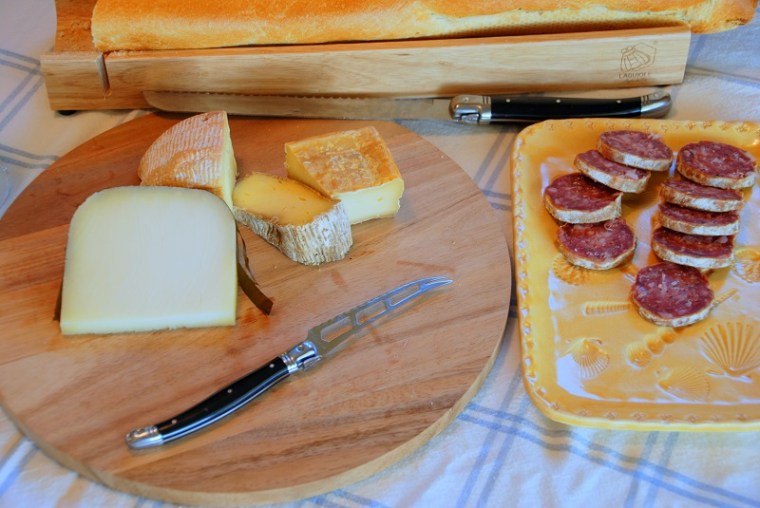
Clockwise from bottom left: Seascape from Central Coast Creamery, Hooligan, Humble from Parish Hill Creamery and Four Square

The Four Square was irresistible, because who would not want to try a four milk cheese? Seana Doughty is the driving force behind Bleating Heart Cheese, the company that creates this cheese (it will be available again this summer, but I got one of the very last pieces of it, it is a limited offering). She and her husband Dave Dalton appear to have a lot of passion for the art of cheese making, a healthy disregard for tradition if it suits them (I am sure purists have nothing good to say about a four-milk cheese) and a sense of humor about the whole thing. The best part about their website is the ‘stories’ section where they present the milk producers. The place that has the water buffalo is Double 8 Dairy and they have their own fun video that shows the daily work on the farm. That one definitely is worth a view.

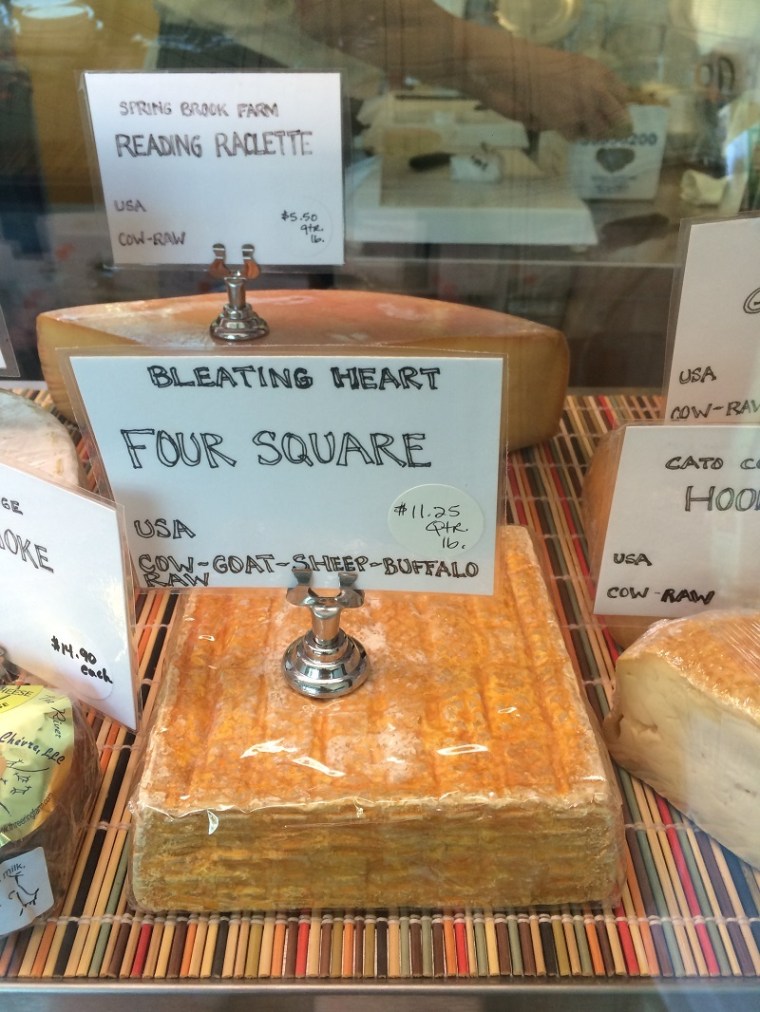
Four Square is made with equal parts cow, sheep, buffalo and goat milk, ripened on redwood planks, washed with a brine every few days for 2-3 months. The squares have developed a very nice orange hue by that time. The cheese is fragrant in the best possible cheesy way and the semi-soft, pale ivory paste has a smooth, creamy texture and an easy, slightly salty taste. It is not overly complex but very pleasant – I may have been a tad disappointed with that, having expected something multi-layered that would take advanced placement classes in cheese appreciation to truly decipher. Instead it was just a very nicely balanced, full-flavored piece of cheese that can be enjoyed without or with rind, the latter for a salty flavor enhancement.

Four Square 2
Four Square: Buffalo, Cow, Goat & Sheep all in one!

Fourme d’Ambert (Week 16)

Fourme d'Ambert
Fourme d’ Ambert: slice of the old block

Cheese: Fourme d’Ambert

Producer: Société Fromagère du Livradois

Where: Fournols, Puy-de-Dôme, France

Think of this cheese as a blue with training wheels. That sounds a little unkind, as if the goal should be to graduate to the more challenging blues, and it’d be far from me to be the Penicillium Roqueforti Nazi. Fourme d’Ambert, as blue cheeses go, is not so sharp, very creamy and still has the musty flavor that comes with the blue mold. For some it could be an ideal gateway drug, others may decide that this is as moldy as they’d like it to get. Unlike its famous cousin Roquefort, this cheese is made with cow’s milk, which is a partial explanation for its smooth flavor; sheep’s milk often lends an edge to the cheese.

Legend has it that Julius Ceasar, on his way to Alesia where he defeated Gaul leader Vercingetorix, munched on some Fourme, which would make it a sort of a Benedict Arnold fromage. More reliable mention of the cheese dates back to the 9th century, where it was used as a currency, if you will: cheese makers, who did their work in stone huts in the summer pastures called Jasseries, paid for the use of the land with their cheese. The Fourme was mostly sold on the market of the town of Ambert, from which eventually it took its name.

The area in which, according to the regulations which bestow the AOP designation on Fourme d’Ambert, is largely in the Auvergne region, and the cows, who need a minimum of 150 outside grazing days, spent their time on land that is between 2,000 and 5,000 feet in altitude. Today the Jasseries are hardly used anymore and the milk is collected by a small number of rather large creameries, which determines the cheese’s designation as a fromage laitier, a factory-made cheese. That sounds worse than it should be because even if the cheese does not come from a single farm (fromage fermier) or is largely produced by hand (fromage artisanal), the entire set of rules still apply: the feed for the animals must come from the designated AOP area, cannot contain any GM products and, importantly, the milk has to be raw, not pasteurized.

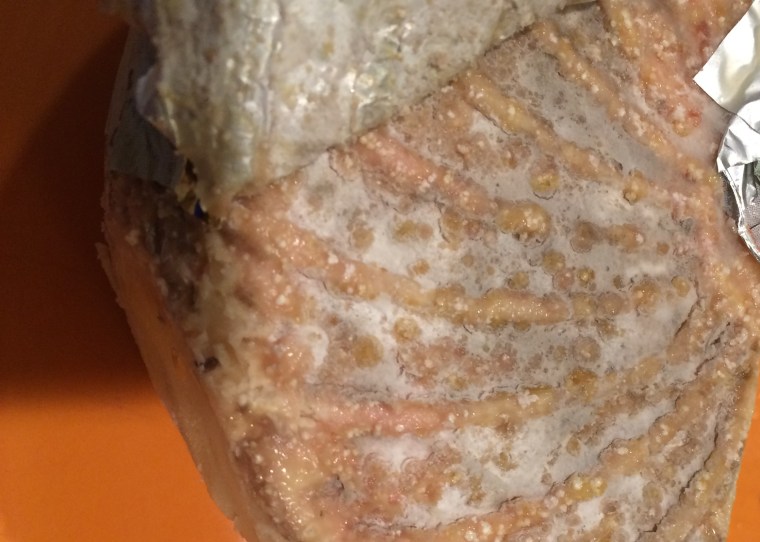
The cheese is marketed after ripening at least 28 days, but a longer period is not uncommon. Some 20 liters of milk, a little more than 5 gallons, go into a Fourme (the word comes from the latin ‘forma’, which is the root, in French, for both forme (form), and fromage (cheese), so Fourme probably means cheese). The shape is always the same: a cylinder 19 centimeters (7.5 inches) in height and 13 centimers (5 inches) in diameter. It is sold by the slice or the half slice, and usually wrapped in foil. The rind is not really edible, but it is very thin, so there is no need to lose big parts of the creamy goodness. My Woodland Hills Whole Foods carries the l’Or des Dômes brand from the Société Fromagère du Livradois.

Rind
Pattern on the Fourme d’Ambert rind

Hooligan (Week 21)

Hooligan I
Stinky Glory – do you smell it?

Cheese: Hooligan

Producer: Cato Corner Farm

Where: Colchester, Connecticut

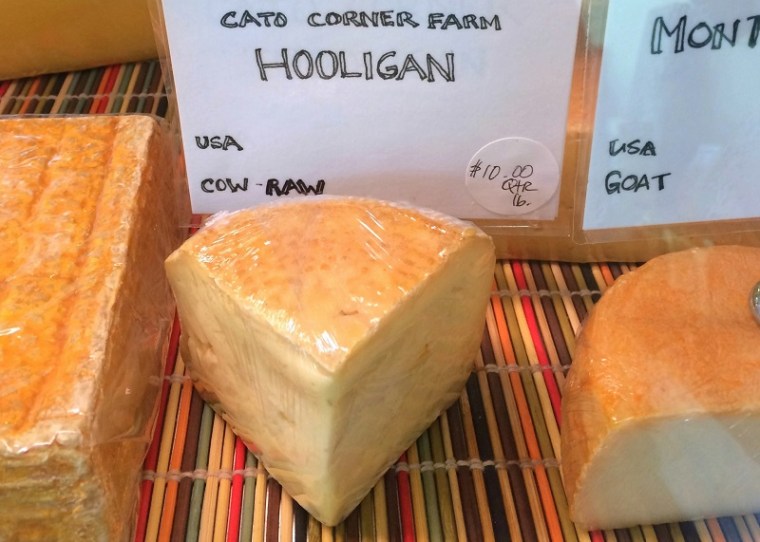
If Cato Corner Farm’s Hooligan could enter a stink-off with a Munster from Alsace, I do not know who would come out on top. Take a piece home with you and forewarn the people in your household, because there is no way you are going to be able to wrap this baby in a way that will prevent the odor to stay inside the paper. Raw milk from Jersey and Brown Swiss cows guarantee that the Hooligan is also  very creamy – there is nothing not to like about this cheese. Cut off the rind, which is washed with brine and buttermilk during the ripening process, or leave a little on for a bit of extra intense flavor and crunchiness.

Hooligan II
Cheese Counter at the Wheelhouse

You can eat it young, when it tastes like grass and grazing cow, or wait for it to start running and take in every last bit of bold flavor – not for the faint-hearted. If you think brie is quite an assertive cheese, pass on the Hooligan. Mark Gilman, the man in charge of creating the cheeses at Cato Corner consulted with French and Belgian cheese makers, who know a thing or two about stink, to come up with the Hooligan. His mother runs the farm and looks after the herd of less than 50 cows. Cato Corner’s website, which has gorgeous ‘portraits’ of its cheeses, suggests to have a beer with the Hooligan, or sweet white wine. I say suspend with the niceties and just start eating that bad boy. There is more than enough in there to keep your taste buds busy. This is one of my favorite American cheeses.

Berkswell II
Berkswell Flying Saucer Goat Cheese

I got the Hooligan and the Wheel House in Culver City, and with it, I picked up a piece of Grayson, a washed rind cheese with small holes, and a nice strong flavor – nothing too funky, but pretty salty. I also got a slice of Berskswell sheep’s milk cheese. It comes from England, from a creamery called Rams Hall, that’s operated by Stephen Fletcher.The town is not far from Coventry, and they drain the whey from the cheese in colanders, which give the cheeses their typical form – round and flat, with a ridge running along the width of the cheese. It has a distinct scent – it pales in comparison to the Hooligan but is is pretty robust. The cheese has a nice, quite complex and rich flavor, and it is not your typical sheep’s cheese. The people at Rams Hall age their cheeses for at least 6 months, which helps to allow all the flavor to unfold, of course. The milk comes from some 350 Frisian sheep. Apparently these animals are prized for their even, friendly temperament. Being half Frisian myself, I think I am qualified to say that what goes for the sheep from Friesland does not go for the people there.

Top 5 cheeses thus far and an explanation (Week 32)

Goats
Dutch White Goat and two Toggenburger friends

High time, 32 weeks into my 52 cheeses project, to have a list: the most enjoyable cheeses thus far. Notice how I did not say the best cheeses thus far? I don’t aspire to be a cheese arbiter, I will leave that to people with better developed palates and a more astute choice of words. I simply look at which cheese encounters provided me with the most all-around joy, and here is what I came up with, in no particular order.

The Remeker is a favorite because I just think this is what God intended when he said: ‘there be Dutch cheese’. It is really that simple, and the encounters with the brown cows certainly did add to the fondness I have for this cheese. The Hooligan is just so much fun because it is in the house, really. Put it in the refrigerator and you cannot open the door without thinking ‘wow, something’s not right here’. Aside from that, it is just a very flavorful, smooth experience. Except when you mix in some crunchy rind. Then it is a crunchy experience. Two for the price of one! The Azeitão is small enough to spoon it out in one sitting. There is a lot of freshness, some tang, a bit of bitter, creaminess, and what is there not to like about a cheese with an ã in the name? The Mua was a surprise with its chamomile rind, which gives it such an inimitable flavor, and finally, for sheer fresh, delicious ooziness, the Croix Catal, which also deserves many points for looks, was unbeatable.

So there you have it: 3 cow’s milk cheese, 1 goat, 1 sheep. Five different countries and honestly, that is a coincidence, I had no desire to create some inclusive-diverse-feel-good list that gave each country its due. There are obviously a lot of honorable mentions, my list will change over time and I do not mean no disrespect to any of the cheeses I tried.

And then to the explanation: most blogs, I hear, do not make it past 10 posts. A few months ago it looked like mine would become a statistic as well. I did eat my cheeses, I did hone in on the cheese of that week and I made my notes, but I couldn’t find much time to write. So in two bursts, I am catching up and until early October, thanks to the wonderful technology of WordPress, my blog will continue to spit out posts on a regular basis, every few days, until I am completely caught up. In the meantime, I will be going forward sticking to one cheese and one post a week (two if there is anything interesting from the travel front) and in 2o weeks we’ll see which cheeses walk away with that coveted 52cheeses.com Gold Medal for 2016….

Oma, the Sound of Cheese (Week 8)

Oma
Bread ‘n Cheese. All you need

Cheese: Oma

Producer: Von Trapp Farmstead

Where: Waitsfield, Vermont

Yes, indeed, there is a connection between the cheese and the von Trapp’s of Sound of Music fame. The great-grandfather of the two cheesemakers, brothers Sebastian and Dan von Trapp was that famous von Trapp, played by Christopher Plummer in the wildly successful movie that took enough liberties with the actual family’s story to leave several von Trapps somewhat irritated with it. At any rate, the cheese makers, above claiming cheap and easy fame instead present themselves as the third generation of dairy farmers from Vermont. Grandfather Werner bought the farm with wife Erika in 1959, and here is where the name of this cheese comes in. ‘Oma’ is the informal address for one’s grandmother in German – in English the cheese would have to be named Grandma. The milk for Oma comes from a herd that is largely made up of Jersey cows, with some other races mixed in. the Farm’s website features some of these happy girls

The semi-soft cheese comes as a small wheel, about 6 inches in diameter. It is aged and washed in brine at the Cellars at Jasper Hill, the affineur that also ripens the Landaff cheese of Week 7 fame. After 60-90 days, the cheese has developed a pale orange rind, a decent smell and a very balanced flavor. As washed-rind cheeses go, Oma is relatively mild and creamy, while full-flavored – perfect if you want a little adventure without completely stinking up your refrigerator. And: it’s made of raw milk, which means the flavor is brought to you in cooperation with the natural bacteria in the milk, not just those added in the cheese making process. Therefore: more flavor, more goodness.

Cheese Counter DTLA Cheese
Cheese Counter at DTLA Cheese

I found my piece of Oma at the DTLA Cheese shop in Downtown L.A.’s Grand Central Market, where they do more than just sell cheese. They also serve a mean mac and cheese and their grilled cheese sandwiches are guaranteed to leave you with strands of melted cheese dangling from your chin. They are so good, you will not care. DTLA is the second venture of cheese sisters Lydia and Marnie Clarke, their first being the Cheese Cave in Claremont.

Queso Fresco (Week 11)

Quesadilla
The end result: delectable quesadillas

Cheese: Queso Fresco

Producer: Quesería Jiménez

Where: La Capilla de Guadalupe

This week I got a gift. A gift of cheese. A colleague who knew about my 52 Cheeses quest brought me something that came with a story. There are few things that connect people to their heritage the way food does, and all of us are familiar with the melancholy sighs bemoaning the absence of some real fill-in-the-blank. In the 1980, when I worked a lot with German tourists in the US, it never took more than about 8 or 9 days before my guests began to lament the quality of American bread, compared to what they like to call black bread. This was well before Whole Foods and in most of the country, burger buns, dinner and breakfast rolls and wonderbread were holding down the bread-fort.

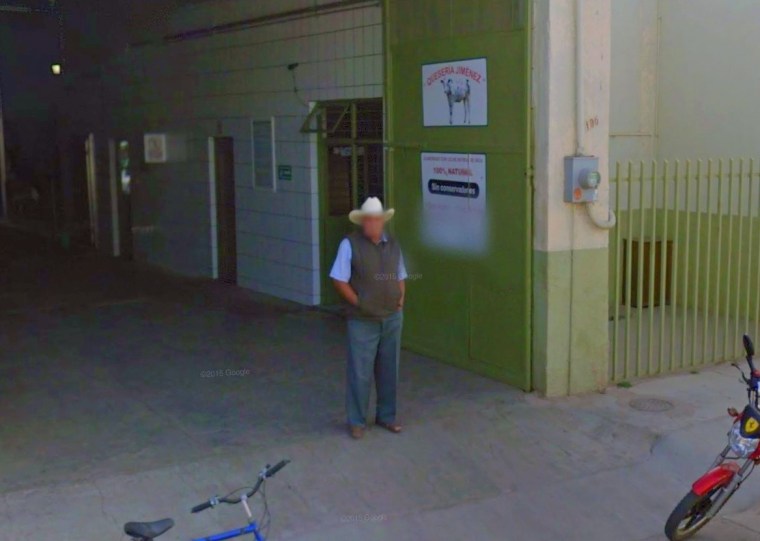
My friend’s family members rejoice and think of a place far away in the old country every time they bite into the pleasant graininess of a soft white Mexican cheese they just call Queso Fresco. She brought me a piece, neatly packaged in a plastic bag to keep the whey from dripping all over my desk. The cheese, she announced, comes from Quesería Jiménez, an unassuming facility that could pass for any other industrial building safe for the cow picture on the door. I was unable to find anything but the streetview google image.

queseria Jimenez
Queseria Jimenez

The quesería is in La Capilla de Guadalupe, and apparently, this modest town is home to the best looking women of Mexico. I am not googling that because lord knows what will come up in such a search. Capilla’s cheese is certainly worth the trouble and the risk – I am pretty sure that bringing it in to U.S. is frowned upon by the FDA. It is creamy, fresh, and not too salty. It melts to create splendid quesadillas which, I am told, is really what this cheese is made for. I enjoyed it just by the slice also, and I realize that I now have the old Playboy excuse if I were to ever travel to Capilla to see if what they say about the women is true: “I am only here for the cheese”, I will be able to claim.

Queso Fresco
Queso Fresco: Cooking up a quesadilla