Καλαθάκι Λήμνου, A Tale of Two Islands (Week 14)

Kalathaki Lemnos II
Kalathaki, still wrapped up

Cheese: Kalathaki Lemnou

Producer: Lemnos Markakis

Where: Myrina, on the Island of Lemnos, Greece

Yes, you guessed it, that’s a Greek cheese I am taking about. I picked it up during a brief stop on a cruise, in the town of Thira on the idyllic Island of Santorini, which more or less lives off tourism and agriculture. I found my cheese in a small, non-descript store that sold local products, and this one looked quite interesting. Little did I know that the island has its very own cheese, Chloro. For various reasons, I had not been able to do any homework on Greek cheese. I did find out later that the particular cheese I picked up comes from an island that was only about 40 miles away from a tiny beach in Yeniköy, in Turkey, where I would dip into the Aegean Sea a few days later. But back for a moment to Santorini.
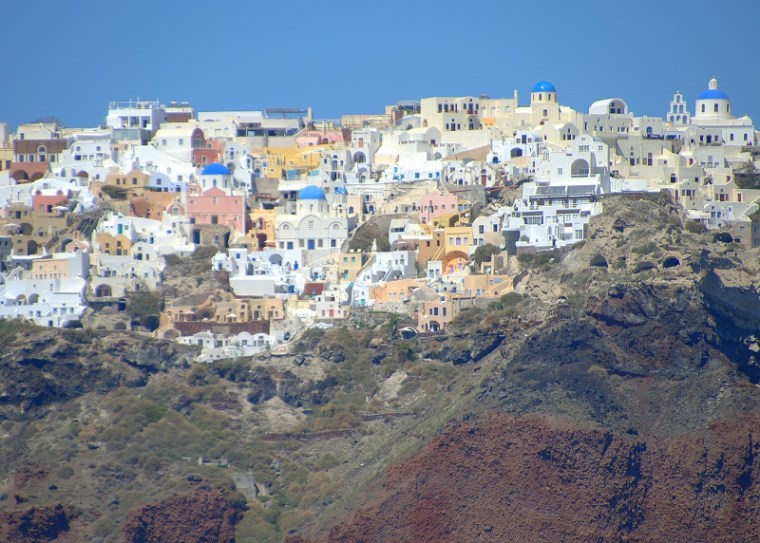
Oia Santorini II
Santorini Island, Village of Oia

3,500 years ago, the people here were none too happy. That was because they got caught up in the Minoan eruption, a spectacular volcanic event that did extensive damage to the old Minoans and their civilization and created the Santorini we know today, a semicircle of sorts surrounding a lagoon with a small island in the middle. Volcanologists see a giant water-filled caldera, where the rest of us just see a string of pretty villages with white walls perched atop some very steep cliffs like icing on a gigantic cake. Thera, where I landed, is the least attractive of the little towns on the island so next time I am there I will have a double mission: see the tiny little towns with the blue-domed churches and get a piece of the Chloro cheese, even if the name does not sound inviting at all.

The cheese I did end up with was still interesting and, since I did not have high expectations, a very pleasant surprise. The Kalathaki was fresh and salty (it spends 3 weeks in a brine bath), with a bit of tang and since goat’s milk and sheep’s milk are mixed together to create it, you do get two flavors for the price of one, and they strike a nice balance, I found. I haven’t been a big fan of feta, perhaps because of the omnipresence of the factory produced stuff that is called upon every time olives and greens meet in a salad.
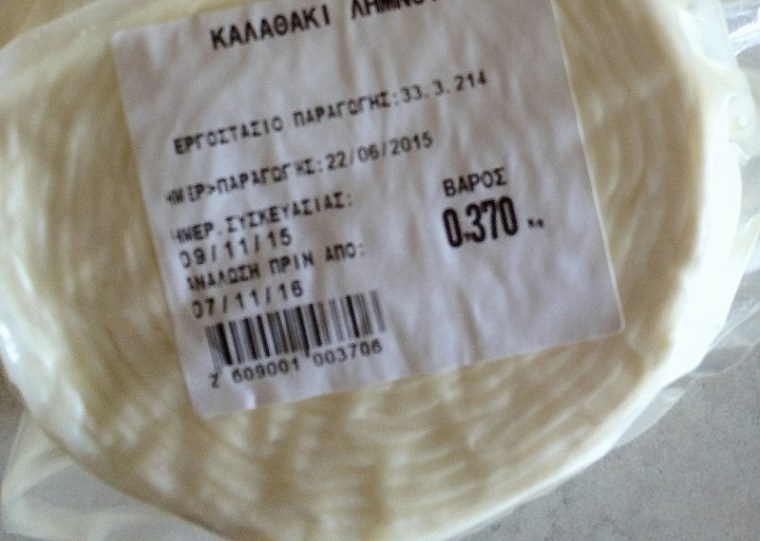
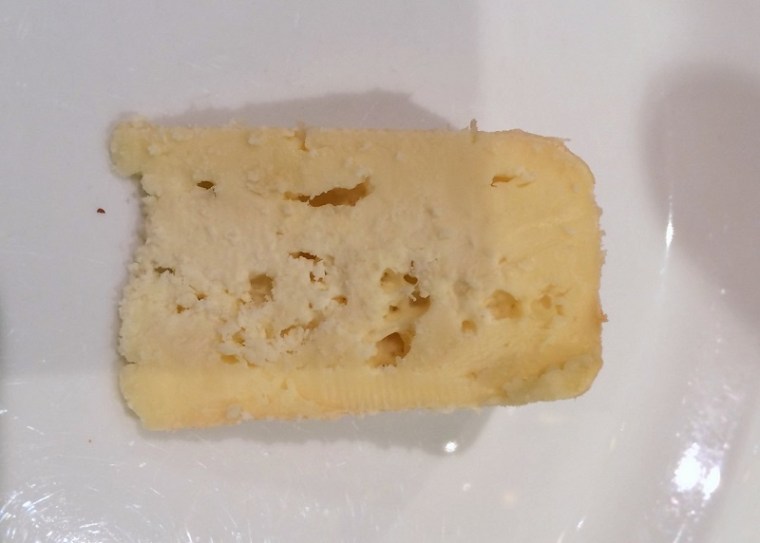
Kalathaki Lemnos
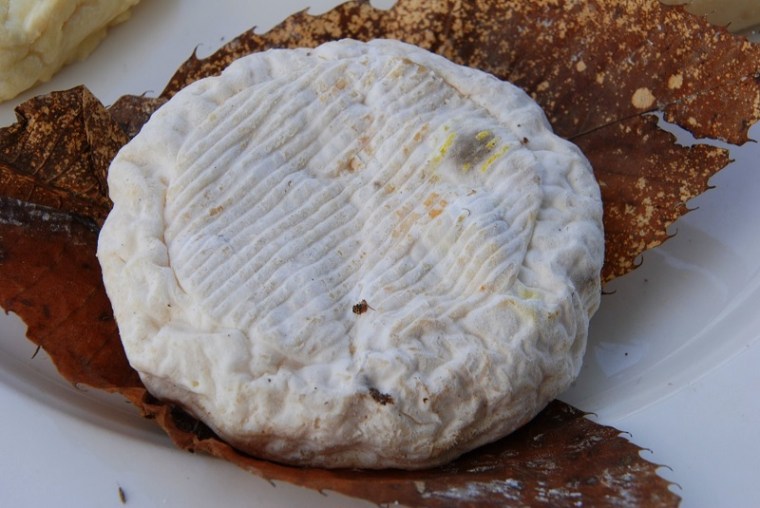
Imprint of the wicker basket that gives the cheese its name

This cheese matures for about 60 days in a small wicker basket and the imprint the basket leaves behind gives the cheese its name: Kalathaki means basket. It is one of more than 20 cheeses in Greece that has a Protected Designation of Origin (PDO, OR DOP, or AOP, depending on which EU language you are using). The sheep and the goats who deliver the milk for this cheese are largely allowed to roam around so what you get in the cheese is the flora and the climate of the island in a relatively straightforward way. Dedicated promotors of the cheese claim that is was around in Homer’s days – but the great poet didn’t really write about it, so it is not that easy to verify.

Santorini Church
Santorini, Cathedral of Saint John the Baptist in Thira
Santorini with 2 ships
Santorini, cruise ships docked in the caldera

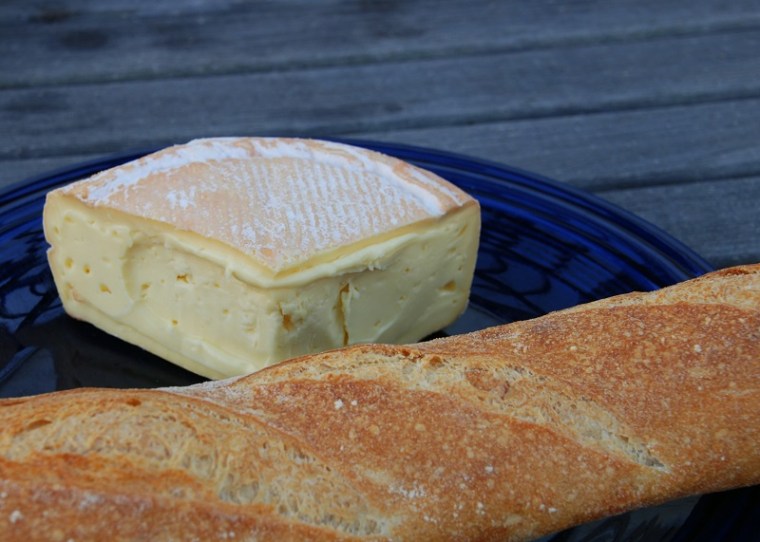
Oma, the Sound of Cheese (Week 8)

Oma
Bread ‘n Cheese. All you need

Cheese: Oma

Producer: Von Trapp Farmstead

Where: Waitsfield, Vermont

Yes, indeed, there is a connection between the cheese and the von Trapp’s of Sound of Music fame. The great-grandfather of the two cheesemakers, brothers Sebastian and Dan von Trapp was that famous von Trapp, played by Christopher Plummer in the wildly successful movie that took enough liberties with the actual family’s story to leave several von Trapps somewhat irritated with it. At any rate, the cheese makers, above claiming cheap and easy fame instead present themselves as the third generation of dairy farmers from Vermont. Grandfather Werner bought the farm with wife Erika in 1959, and here is where the name of this cheese comes in. ‘Oma’ is the informal address for one’s grandmother in German – in English the cheese would have to be named Grandma. The milk for Oma comes from a herd that is largely made up of Jersey cows, with some other races mixed in. the Farm’s website features some of these happy girls

The semi-soft cheese comes as a small wheel, about 6 inches in diameter. It is aged and washed in brine at the Cellars at Jasper Hill, the affineur that also ripens the Landaff cheese of Week 7 fame. After 60-90 days, the cheese has developed a pale orange rind, a decent smell and a very balanced flavor. As washed-rind cheeses go, Oma is relatively mild and creamy, while full-flavored – perfect if you want a little adventure without completely stinking up your refrigerator. And: it’s made of raw milk, which means the flavor is brought to you in cooperation with the natural bacteria in the milk, not just those added in the cheese making process. Therefore: more flavor, more goodness.

Cheese Counter DTLA Cheese
Cheese Counter at DTLA Cheese

I found my piece of Oma at the DTLA Cheese shop in Downtown L.A.’s Grand Central Market, where they do more than just sell cheese. They also serve a mean mac and cheese and their grilled cheese sandwiches are guaranteed to leave you with strands of melted cheese dangling from your chin. They are so good, you will not care. DTLA is the second venture of cheese sisters Lydia and Marnie Clarke, their first being the Cheese Cave in Claremont.

Queso Fresco (Week 11)

Quesadilla
The end result: delectable quesadillas

Cheese: Queso Fresco

Producer: Quesería Jiménez

Where: La Capilla de Guadalupe

This week I got a gift. A gift of cheese. A colleague who knew about my 52 Cheeses quest brought me something that came with a story. There are few things that connect people to their heritage the way food does, and all of us are familiar with the melancholy sighs bemoaning the absence of some real fill-in-the-blank. In the 1980, when I worked a lot with German tourists in the US, it never took more than about 8 or 9 days before my guests began to lament the quality of American bread, compared to what they like to call black bread. This was well before Whole Foods and in most of the country, burger buns, dinner and breakfast rolls and wonderbread were holding down the bread-fort.

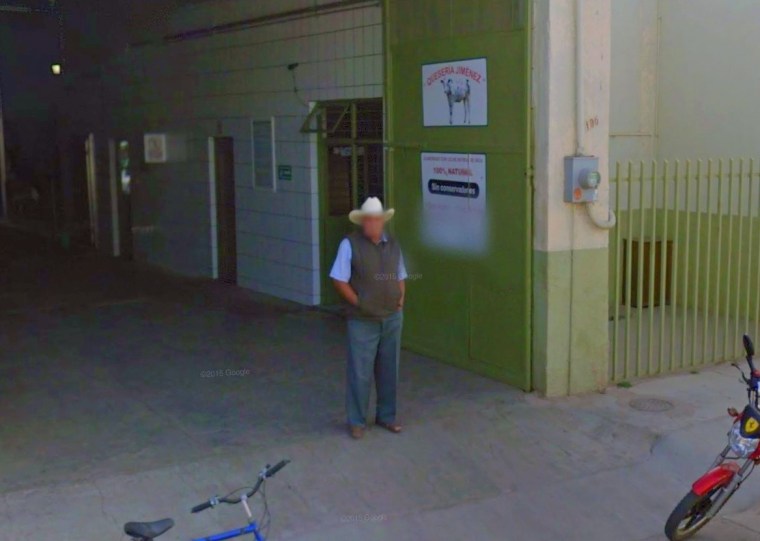
My friend’s family members rejoice and think of a place far away in the old country every time they bite into the pleasant graininess of a soft white Mexican cheese they just call Queso Fresco. She brought me a piece, neatly packaged in a plastic bag to keep the whey from dripping all over my desk. The cheese, she announced, comes from Quesería Jiménez, an unassuming facility that could pass for any other industrial building safe for the cow picture on the door. I was unable to find anything but the streetview google image.

queseria Jimenez
Queseria Jimenez

The quesería is in La Capilla de Guadalupe, and apparently, this modest town is home to the best looking women of Mexico. I am not googling that because lord knows what will come up in such a search. Capilla’s cheese is certainly worth the trouble and the risk – I am pretty sure that bringing it in to U.S. is frowned upon by the FDA. It is creamy, fresh, and not too salty. It melts to create splendid quesadillas which, I am told, is really what this cheese is made for. I enjoyed it just by the slice also, and I realize that I now have the old Playboy excuse if I were to ever travel to Capilla to see if what they say about the women is true: “I am only here for the cheese”, I will be able to claim.

Queso Fresco
Queso Fresco: Cooking up a quesadilla

Robiola la Rossa (Week 12)

Robiola la Rossa
Waiting to be unwrapped: la Rossa

Cheese: Robiola la Rossa

Producer: Cora Formaggio

Where: Monesiglio, Italy

This week I was in the Netherlands, a short stopover on my way to Switzerland. The small town where my mother lives has a large supermarket with a surprising array of cheeses, but there is also a cheese store that offers some really remarkable surprises. One find in particular was worth writing about: a small, soft goat cheese, wrapped in leaves from a cherry tree. This Robiola la Rossa is made in the Piedmont region of Italy, and it is spectacular. The cherry leaves bestow a rich caramel color to the rind, and a strong fruity flavor. It is perhaps like the Italian version of the Banon cheese. When cherry-flavored cheese sounds like something you would look for at the county fair, think again. The fresh tanginess of the cheese and the subtle, deep cherry flavor are in perfect balance here, and the result is absolutely delicious. The cheese is 300 grams, about 10 ounces, and my mother and I finished it off in one seating. Cora Formaggio has a wonderful website that provides great detail about their farm, the cheese making traditions of the region – and any farmer that has his portrait picture taken with his animals is a good man in my book. The Robiola la Rossa gave me a new idea for a trip: I would love to meet Signore Cora and his goats in Monesiglio.

Robiola la Rossa 2
Heavenly Formaggio

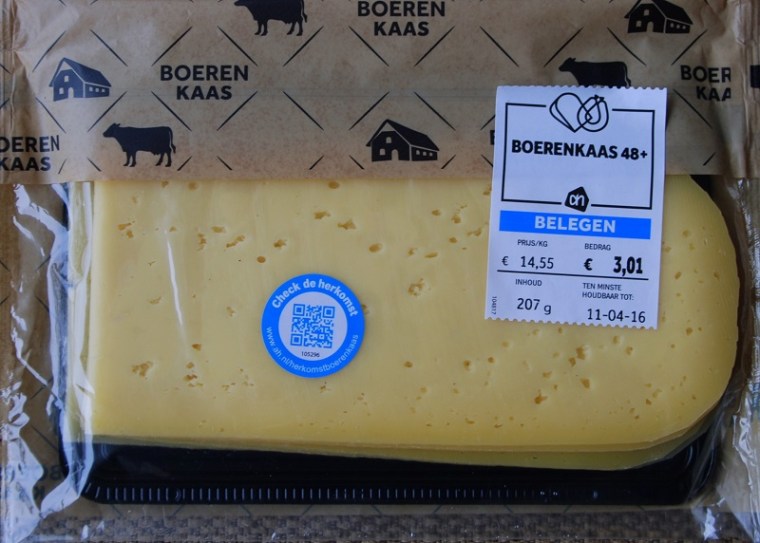
In the supermarket, I discovered two other interesting items: cheese in a pot and ‘boerenkaas’ (farmer’s cheese, that is, cheese from unpasteurized milk) with a QR code on the wrapper that links to a delightful little video about the farm that produces the cheese. It is in Dutch, but much of it is easy to follow: it basically shows how milk becomes cheese, and it has great footage of friendly red and black cows. A very 21st century way of connecting people with the ways in which their food is produced.

Matthijssen Boerenkaas
Traceable to the Matthijssen Farm via the QR code

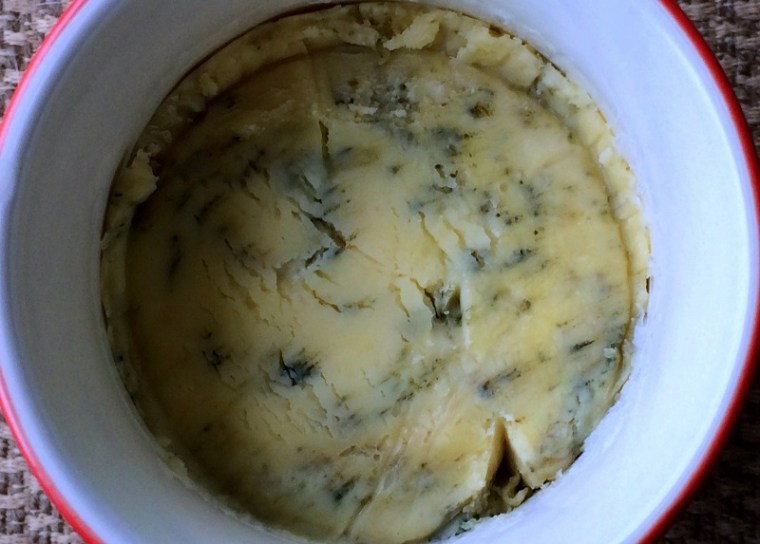
And then there was the Stilton in the jar: a small red-and-white pot, quite pretty, with blue Stilton in it. I have never seen anything like it. Inside the pot was the real A.O.P. deal – creamy, not too sharp, and just enough aroma to remind you that it is a blue cheese. I will say, once the fun has worn off a little, you recognize that it was probably never a very good idea to stuff a small jar with cheese: it was hard getting the stuff out, it took a bit of scraping. Some other time, I will re-engage with the Stilton preferably in the UK, and I will talk more about it then. And I am not buying any more jars.

Stilton 2
There’s Stilton in the jar
Stilton
Cheese  jar

Landaff (Week 7)

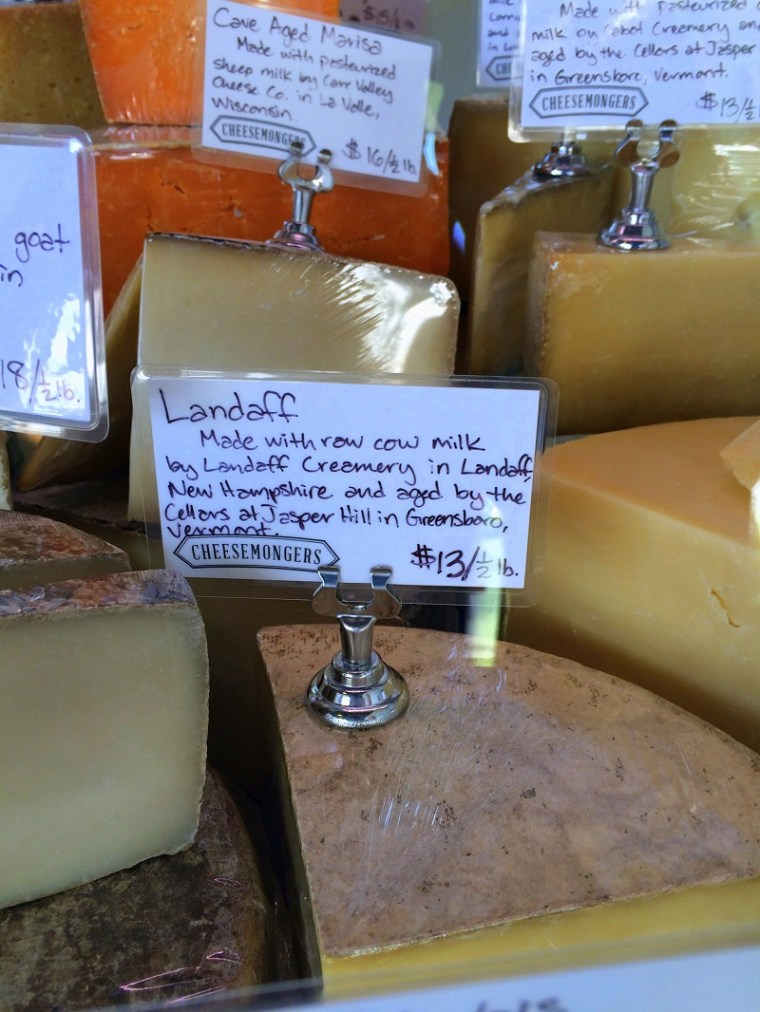
cheesemongers sherman oaks
Beautiful labels in the cheesecounter

Cheese: Landaff

Producer: Landaff Creamery

Where: Landaff, New Hampshire

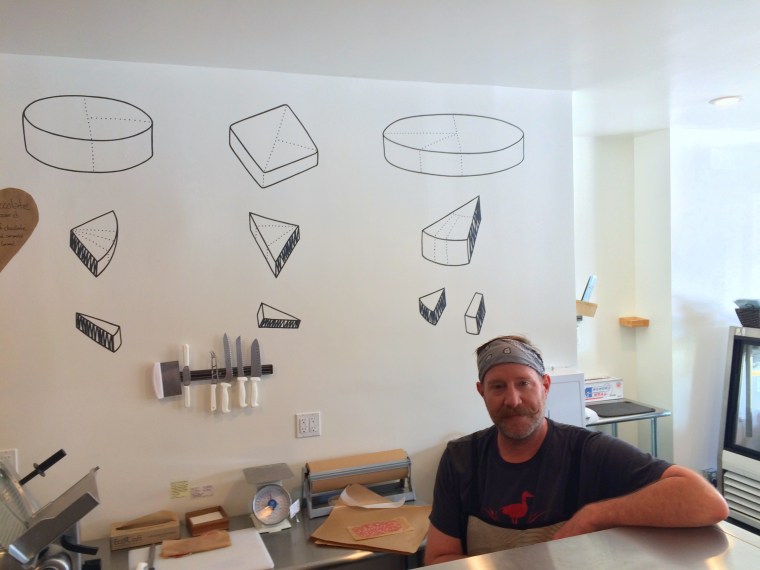
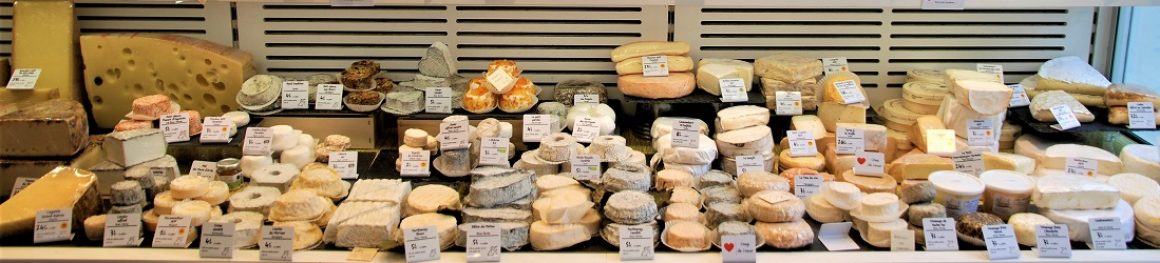
Being back in Southern California this week meant we would look for a Southland cheesemonger who would bring us something new and exciting. We found one surprisingly close to my place of work and after braving the congestion of the Los Angeles freeways for a bit we walked through the door of the Cheesemongers of Sherman Oaks and met Chaz, who cuts a dapper figure at the cheese and cured meats counter with a fabulous moustache and a crisp striped apron. The shop is airy, well-lit and clean-looking. The cheeses and the meats and the cutting boards made of olivewood or slate and the meticulously written signs in the cases make the place a delight to behold, and it does make you want to try if not buy, well, pretty much everything they have on offer. We settled for a piece of Bolivian chocolate that seemed a steal at something like $7, some incredibly flavorful cured meats and a piece of Landaff cheese.

IMG_1117
Chaz Christianson, the meat man

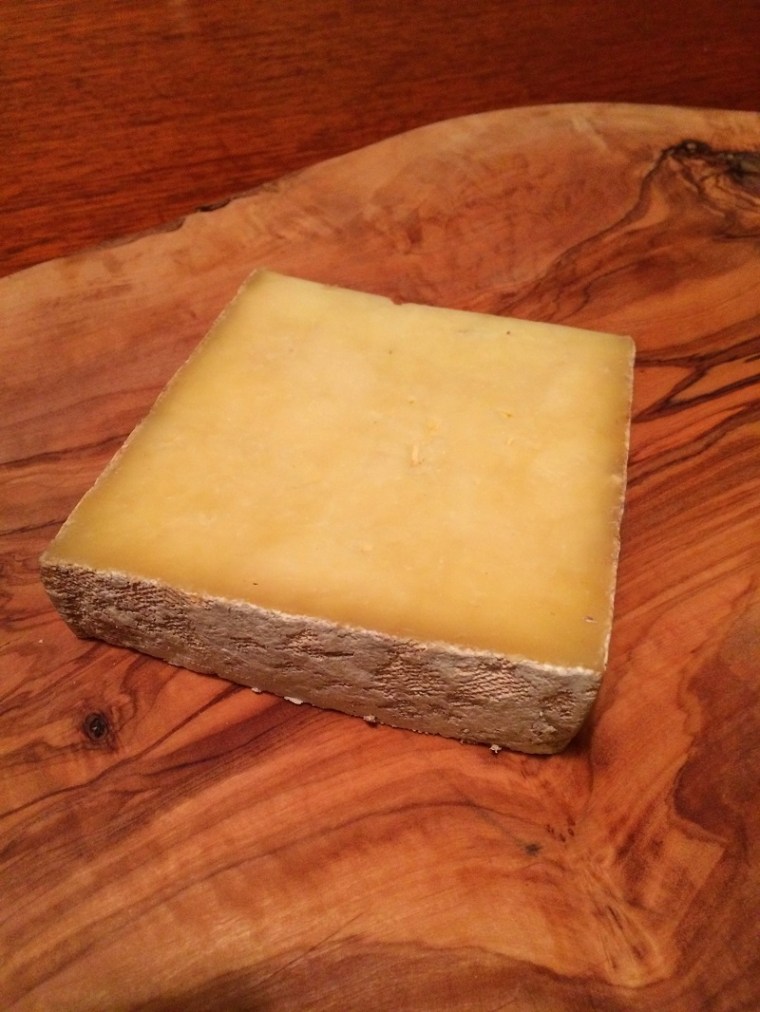
Landaff is a town of a little over 400 souls in New Hampshire and if you google it, you can see that the Landaff Creamery is the most important business in town. The New Hampshire cheesemakers, knowing that their town’s name comes from the eponymous town in Wales, found their inspiration across the Atlantic and used a recipe from there. Our cheese had a beautiful clean natural rind and a buttery yellow color with a little white mottle. The cheese itself reminded me vaguely of cheddar, but it was more flavorful and complex. Despite the fact that it is a raw milk cheese the flavor doesn’t linger much in your mouth – it is a clean dismount, if you will. Charlie went to school one day with a turkey & cheese sandwich with a lot of Landaff and he was a very happy camper. I ate most of it in thick slices as an evening snack. It is a cheese that plays well with others, and it can go with pretty much anything, although I would not combine it with heavy red wines. In fact, I will have a beer with my next chunk of Landaff.

Landaff
New Hampshire Gold: Landaff Cheese

Raclette (Week 6)

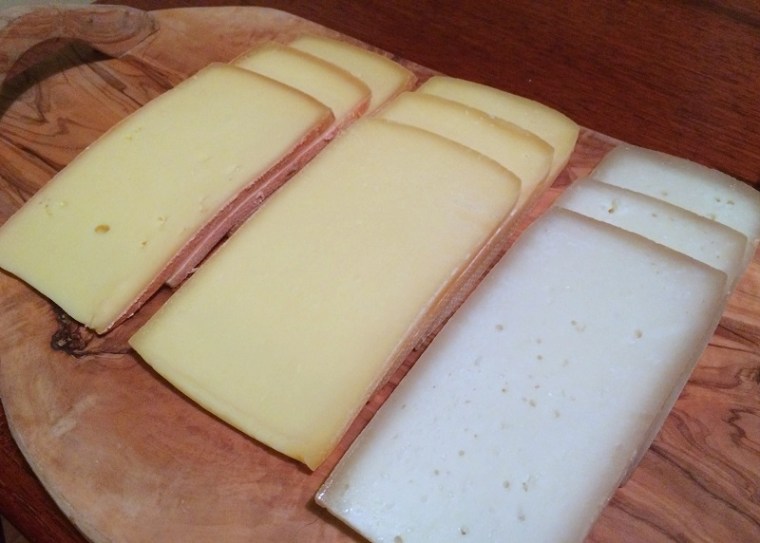
Raclette Cheese

Left to right: Valais AOP, Baselbieter, Sheep Raclette cheese

Cheese: Valais Raclette AOP

Producer: –

Where: Valais Canton, Switzerland

I returned from a business trip to Basel, Switzerland with a suitcase full of Raclette cheese. OK, that’s a grave exaggeration, but I had enough for a meal for three. Raclette is originally a cheese from the Valais Canton in Switzerland, but it is also used to describe a meal of melted cheese. So while there is the cheese with the official designation and protection (AOP) from Valais, there are a lot of different cheeses sold as Raclette cheese. These are semi-hard cheeses, often sold in slices, to be melted in the little pans of a raclette-maker, and then poured onto potatoes, bread or veggies (or anything else you think of, as long as it will taste good with a coating of molten cheese.  The alleged history of the cheese is spectacular: in Roman times, it had already been around for centuries, and some even used it in lieu of money. And then, in the Middle Ages, Léon the Valaisian farmer came by, had the brilliant idea to melt the cheese and the rest… well, is even more history.

I brought some local (‘Baselbieter’) cheese, some made of sheep’s milk, and some Valais AOP Raclette, the Real Deal. In a traditional setting, an entire wheel of Raclette may be cut in half, and put close to an open fire with the cut side. Imagine a sturdy Swiss herdsman walking around the table scraping off portions of melted cheese off the big wheel, onto his fellow men’s plates.

We did have to imagine the open fire and the Swiss herder, because we poured the melted cheese from our little pans in the comfort of our home in southern California. One promotional site describes the cheese as “a source of pleasure and conviviality” – and really, we had a very convivial evening.

Ready for Raclette
Ready for Raclette

Raclette cheese is perfect for melting, it slips easily out of the little pans, often without the help of the little scrapers. We had a variety of potatoes and three colors of cauliflower, and we got quite creative with the meats. The Swiss eat prodigious amounts of thinly sliced cured meat, much of it from the Cantons of Graubünden and Valais. I did not bring any, so with the help of Chaz Christianson, whom we met at the cured meats counter of the Cheesemongers of Sherman Oaks we added an eclectic mix of international delicacies – one juicier than the next. More about our visit there in the next post.  The Raclette from Valais – Wallis, as the German-speaking Swiss call it – was the clear winner. Not only did it melt to a perfectly smooth, fragrant goop, its robust, somewhat tangy taste only got better with the melting.

Cured Meats at Cheesemongers of Sherman Oaks
Chaz’ Counter of delicious meats

Banon AOP (Week 5)

Banon 1

Banon: goat cheese wrapped in chestnut leaves

Cheese: Banon AOP

Producer: Fromagerie de Banon

Where: Banon, France

I spent the first few days of this week in Avignon, and the Cheese Primer suggests that two of the ‘worthy’ cheeses from Provence/ Dauphiné region are the Banon and the Saint Marcellin. Steven Jenkins is the author of this book, which I bought quite a few years ago and which is starting to show its age: it was published in 1996 and back then it won a James Beard award, but unfortunately, it has by now missed 20 years of development – nothing in his book about the splendid new cheeses in the US (he dedicates a chapter to the US, but the pickings are slim), or any of the newer creations in Europe. In fact, it even predates the AOP designation of the Banon, which was awarded in 2003. At some point in this blog, I will write something about the Appellation d’Origine Protégée, but for now it suffices to say that this designation indicates to consumers that they are buying the real deal, in this case a cheese that is produced according to certain rules in a certain area, using certain ingredients, in this case raw goat milk.

It is a little round cheese, about three inches in diameter and an inch thick, with a nice white rind and a smooth creamy paste. Banon are wrapped in chestnut after 5 to 10 days of ripening. The leaves are soaked in water or a water & vinegar mix and this takes out much of the tannin, but the overall idea of this wrapping is that the leaves do not just protect the cheese but also impart some flavor. The leaves are carefully folded around the cheese and kept in place with a strand of natural raffia. If nothing else, the cheese looks very pretty and it makes for a good story. The cheese is named for the small market town that sits on a 2,600 feet ridge about 60 miles east of Avignon. There is a legend that Antoninus Pius, Roman emperor from 138 to 161, ate so much Banon that he fell ill and died a few days later. I am not quite sure why the people that are selling this cheese think they need to tell this story.

Local farmers who used their goats (‘poor man’s cows’) for milk produced cheese for their own use and sold any surplus in the nearby towns. Today the region in which Banon is produced is carefully delineated, outside of it, farmers can wrap their cheese in chestnut leaves all they want, but it’s no Banon!

The second cheese I bought was the Saint Marcellin, named after a town two hours north of Avignon, a little over a half hour from the banks of the Rhône. It is ridiculously creamy, packs a lot of flavor and a bit of a bite when thoroughly ripened. That big glob of cheese on the bread is Saint Marcellin.

Saint Marcellin
Creamy goodness: Saint Marcellin

The bread by the way is typical for the region: walnuts and grapes, soaked in red wine for a while, are kneaded into the dough – pain vigneron. It is the kind of bread you can just keep munching away at until it is miraculously gone.

Third cheese! The Pélardon is from the Cévennes region, in the Massif Central, quite a ways from Avignon, so it didn’t fit in my plan of having strictly regional cheeses, but my companion, Magalie insisted, and she’s a chef, so I did as I was told. It was worth it: it is dry, has the typical goat flavor with nice complexity – a good one all around. One of the great things about some of the AOPs is that they prescribe what the animals eat and where they eat it – in this way, these rules ensure that the consumer knows that their cheese comes from goats who have a decent life. The Pélardon has an AOP designation as well.

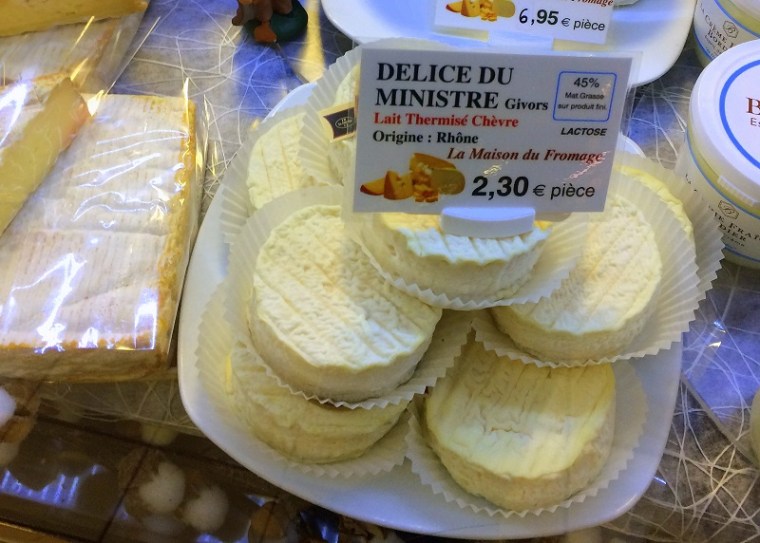
Delice du Ministre
Tres delicieux: Delice du Ministre

For good measure, I bought three other cheeses (and I thought I showed great restraint): a goat cheese from the Chevrerie du Pesillon, one from the Terrasson farm, and finally a Délice du Ministre from Givors, a town along the Rhône. This last cheese has its roots in a small town called Vinay, not far from Saint Marcellin and I cannot figure out why it is not better known. The only thing I have learned that it received its name because high ranking government official in the past would have goatees, and were subsequently referred to as goats. Délice du Ministre is thus a reverse-play on that nickname. It was a delightful surprise, I actually liked it the best of all of six cheese – perhaps it was a draw between the Saint Marcellin and the Délice.

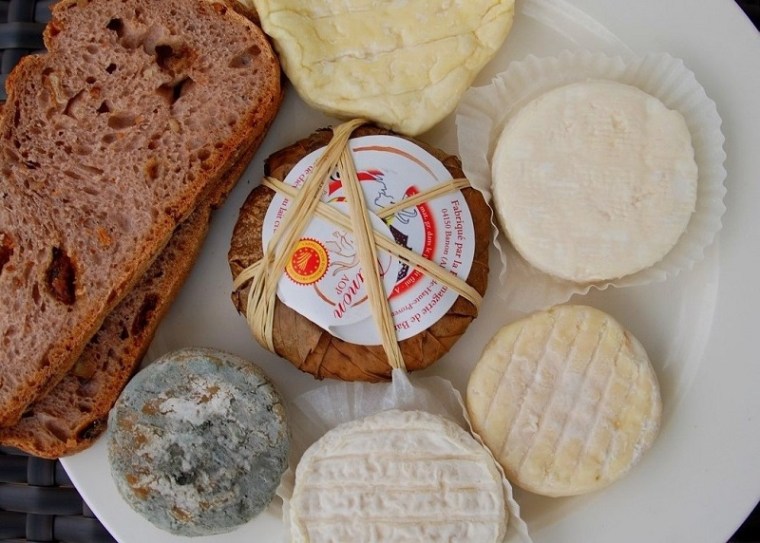
On the plate with the six cheeses, they are, from center top clockwise: the Saint Marcellin (cow’s milk, by the way), the Pesillon, the Pélardon AOP, the Délice du Ministre and the Terrasson (with the grey mold). The Banon sits in the center.

French Goat Cheeses
On ne peut jamais avoir trop de fromage!

Remeker (Week 4)

DSC_0155

Cheese: Remeker

Producer: De Grote Voort

Where: Lunteren, the Netherlands

We spent last Christmas in the Netherlands and part of the Christmas Eve ohmygoodnessIatetoomuch dinner was a cheese plate. Christine’s only demand was that there would be a camembert au lait cru; otherwise, I though it a splendid idea to have only Dutch cheeses. I picked up an order from l’Amuse, a very well-established cheese monger in Amsterdam; highly recommended if you are ever in the city and you are tired of the Rijksmuseum, the van Gogh and the touristy cheese places in the canal belt. L’Amuse is a few tram stops away, and my trek out there was rewarded with a splendid suggestion from the gentleman I corresponded with: don’t take the hangkaas, take the Remeker instead. The prille Remeker became everyone’s favorite cheese (the blue goat cheese from Drenthe was somewhat of a bomb). So when I had the chance, I visited mother Ouendag, drove about 30 minutes through the drab countryside to visit the farm of Irene and Dirk-Jan van de Voort.

DSC_0140

They keep a herd of Jersey cows, and go about making raw milk cheese with an incredible zeal. Irene wrote a book and in it you can read about a family hovering between passion and obsession about making the best dang cheese you can image. And, by golly, I do not believe Dutch cheese ever tasted so good. I got a piece of ‘pril’ – 3 months old; a piece of ‘ryp’ (8-9 months); and a piece of Olde Remeker, which has ripened 13 months. All three of them were absolutely worth the trip. They’re creamy, extremely flavorful, salty but not too salty, complex, and the taste stays with you for a while. When I took my leave from mom, I left some Remeker for her, brought some for Molly, who had to endure the craziness of the hunt for cheese #3, and a nice chunk of ryp for the family. ‘t was a sad day when that Remeker ran out, but I will be back there for more. The bread and the gooseberry-elderberry blossom jam I picked up there were also to die for.

DSC_0161


Munster Fermier (Week 3)


Munster Fermier c

Cheese: Munster Fermier

Producer: Ferme Schott & Ferme du Lameysberg

Where: Breitenbach, Alsace, France

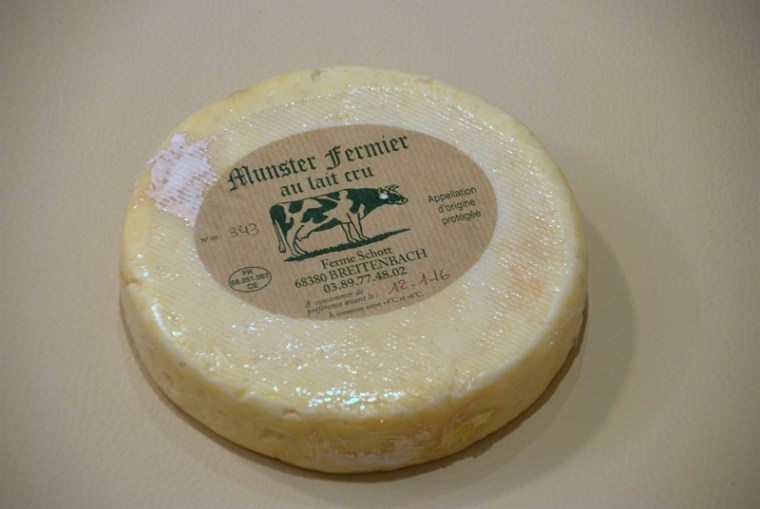
The real Munster, cheese experts will tell you, has nothing to do with the cheese that is sold as such in the US, or the version that is linked to the eponymous city in Germany. Munster is a small town in the Vosges Mountains of Alsace, Northwestern France, close to Basel, and during a visit to our Basel office it seemed like a great idea to venture out into the countryside to find a Munster Fermier, buy it directly from a cheese farmer and say hi to the cows, the Vosgesiennes, a breed that is specific to the area (but Munster doesn’t necessarily need to come from milk of these cows). The mottled white & black animals apparently don’t mind the sometimes inclement mountain weather of the high pastures. In winter they are brought down to the farm and I guess purists would stay away from the cheese made from winter milk: the cows eat hay, not that nice mix of grass, herbs and wildflowers that grow in the meadows of the Vosges.

Murbach Abbey Winter c
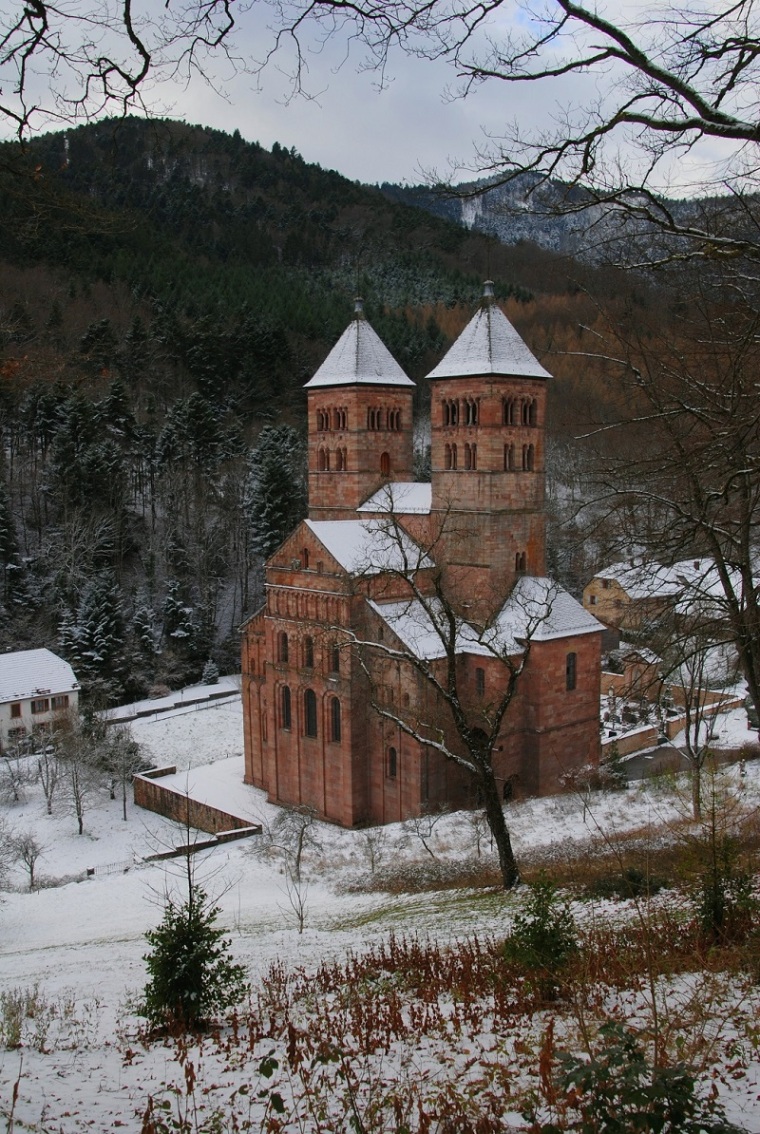
Transept of the abbey of Murbach, Alsace


View on Stosswihr c
View on Stosswihr

The plan seemed simply enough, and I took a colleague along for the ride. There is a cheese museum of sorts in a town close to Munster and farms that sell cheese are clearly mapped on a website that provides lots of information about Alsace’s most famous cheese. Alas, the cheese museum was closed for winter (the website didn’t spill those beans) and one of the obvious candidate farms was closed for lunch. When we came back after lunch, there was a handwritten sign on the door that said “Out on an errand, back in 20”. 20 minutes came and went and poor Molly must have regretted that she joined what tuned out to be a mad quest for fromage fermier.

Ferme du Versant du Soleil Alsace c
The cheese is there, but nobody’s home. At La Ferme du Versant du Soleil in Hohrod

In the end, we got our Munsters in Colmar, a very charming little town not far from the Rhine. It’s a major tourist draw in southern Alsace, and it was the home of Frédéric Auguste Bartholdi, the man who sculpted some nice fountains and other statuary. Oh yah, and that lady that stands in New York Harbor, welcoming the poor, tired, huddled masses….

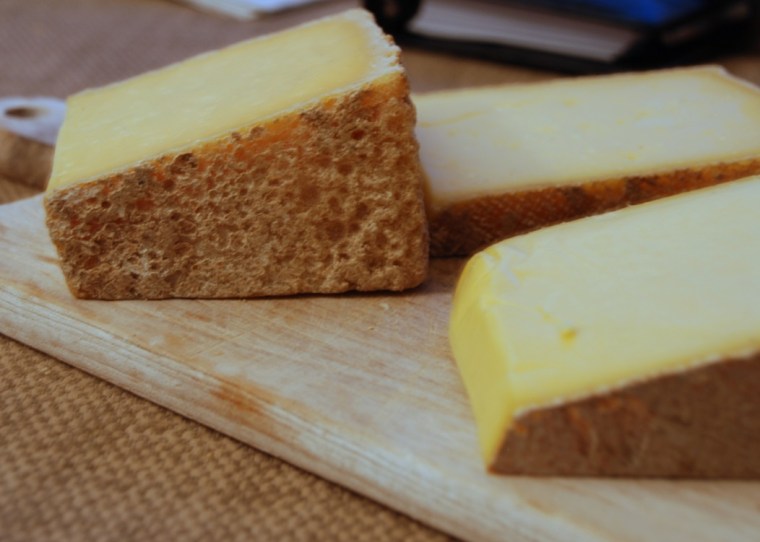
Munsters are stinky, there’s no 2 ways about it. Really stinky. We came home to the hotel in Basel and ate our cheese with some dried Bündnerfleisch and drank a vendanges tardives Gewürztraminer with it. The Munster from Hubert Schott was still young, and as such the flavor was surprisingly mild. You would expect such a stinky cheese to be quite a mouthful. The Munster from the Ferme du Lameysberg was riper and here, the flavor was more robust. All in all worth the quest (we never did see any Vosgesiennes) but for January, the top ranking still goes to the Rush Creek Reserve.

Munster c
Hubert Schott’s Munster


Quesillo Oaxaca (Week 2)

DSC_0009c
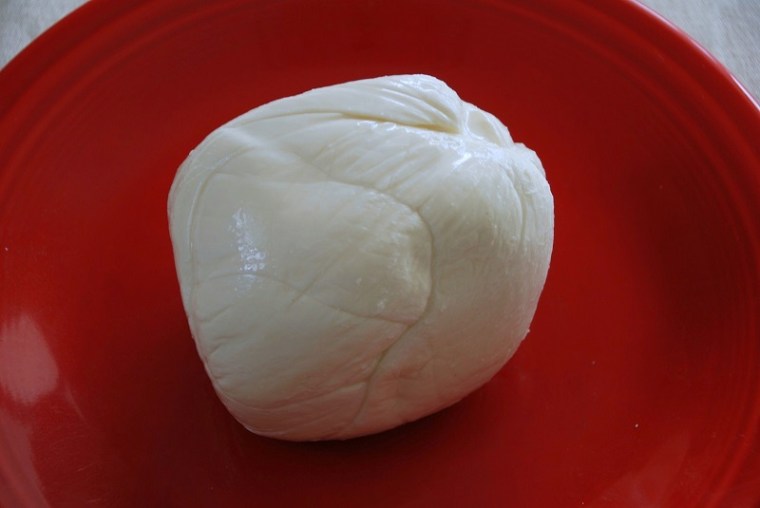
Tangled Oaxacan Cheese

Cheese: Quesillo Oaxaca

Producer: –

Where: –

One of the stops on a food tour in Boyle Heights this week was a particularly delightful surprise: in an otherwise very nondescript building, we found a covered market in the basement that turned out to be a delight for the senses. I picked the two most interesting cheeses I could find at a vendor who sold cheese and meats. The first one was the Quesillo Oaxaca, a white ball that looks like the Mexican version of a Mozzarella, which it sort of is. Apparently some Italian farmer, with the support of the Mexican government, came over in the 1950 and taught locals to produce cheese. Another story has Dominican monks teach the Oaxacans how to make Queso. And then there is the legendary Leobarda Castellanos García, a girl who, back in 1885, was charged with watching the slow heating of the cheese curd, but got distracted until the stuff was overcooked. She panicked, decided to throw hot water on the curd and voilà, thusly was born Mexican pasta filata cheese.

Of course, mozzarella cheese is made by putting the curd in hot water, too, so this accidental screw-up neatly dovetailed with centuries of cheesemaking history…. The pulling of the curd, which gets a little rubbery, and then the kneading into a ball: there are really good reasons to think that at some time, there was an Italian (Dominican or not) that introduced the Oaxacans to this cheese.

DSC_0003c
The Queso before the entanglement

Most Mexican cheese is used in cooking, and Queso Oaxacathis is particularly well suited for quesadillas. On its own I thought it tasted very fresh (you are supposed to eat this cheese when it is only a few days old and it comes in a plastic bag complete with a generous helping of liquid), but not as creamy as good mozzarella and a little salty to my taste. I think I will need to try it again, and travel to Oaxaca to do it there. I frankly have no idea where exactly this cheese came from: it is imported, but also produced locally.

I learned a lot more about the Oaxacan cheese from a blog by food historian Rachel Laudan. She writes that there is a Mexican expression: “That’s more tangled than a Oaxacan cheese”. Just how tangled that cheese can get is obvious in the picture: all the king’s horses and all the king’s men couldn’t get that cheese back together again.

DSC_0014c
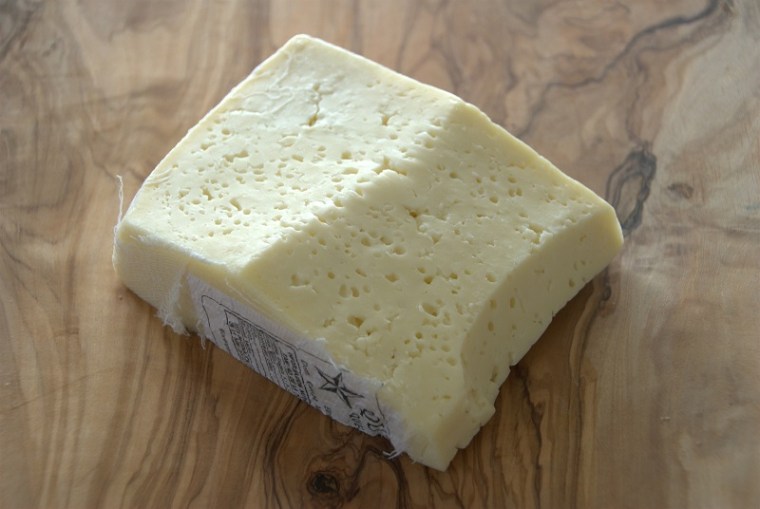
‘Tipo Chester’ Cheese from Chihuahua

The other cheese was semi-hard, with small little irregular holes. It is produced in a Mennonite Colony near Las Virginias, 168 miles south of El Paso in the Mexican State of Chihuahua. The cheesemaker is called La Estrella, and they call the cheese ‘Tipo Chester’. It was mild with a bit of a sharp edge and a tang, quite nice. It’s also called Chihuahua cheese, but it seems that there is quite a variety of different cheeses that fall under that geographical designation, which would not make it very helpful if you were to be looking for a specific cheese. It’s also called Mennonita, because the Mennonite colonies in northern Mexico are known for their cheese-making prowess.

As far as the animals that produce the milk are concerned, Rachel Laudan says the preferred cows in Mexico are crossbreeds between Zebu and Brown Swiss. The latter’s heritage is easy to guess, the former is basically an Indian cow. The great thing about these animals is that they do well in the heat, and that of course is a good thing in much of Mexico.

In the end, neither cheese would rank high on my list of favorites, but I will maybe find some time in these 52 weeks to give Mexican cheeses another shot. In the process of reading up on Oaxaca, I learned they eat chapulines there, grasshoppers, among a host of other interesting and flavorful foods. We’ll need to find a really good Oaxacan restaurant in the Southland to prepare for a trip down there!